I did a blog for The Spectator last week about setting Ice Force in the Arctic, but for anyone who missed it, here it is again.
The Cold War produced some of the great classics of British spy fiction. From the gadgets and babes with exotic Eastern European accents of the James Bond books, to the non-stop action of Alistair MacLean or the dark treachery of John Le Carre and the intricate office politics of Len Deighton, it served as the perfect vehicle for just about every type of story a writer could imagine. More scenes were set in the few yards around Checkpoint Charlie than anyone could keep track of.
But now there is a new type of cold war – one that is more literal than metaphorical. The Arctic is perhaps the most compelling region in the world to set a thriller in 2012 – which is why I chose to set my new novel ‘Ice Force’ in the frozen wastelands around the North Pole.
What makes a great location for a thriller? Well, there needs to be intrigue, of course. And conflict as well. The Arctic has plenty of both. The world’s last great untapped reserves of oil lie under the Arctic Ocean – about 25% of the world’s remaining fossil fuels, according to the latest estimates. But who owns it? For the last few hundred years, no one cared very much. There was nothing out there, apart from a few polar bears. Now everyone wants a share. The Russians claim that much of the Arctic is their territory, and have been provocatively planting flags wherever they can. The Americans – via Alaska – claim a chunk. So do the Canadians. And so do the Danes (via Greenland).
And oil, of course, is power in today’s world. Russia is already the largest oil producer in the world, pumping 10.5 million barrels a day. Add together its existing domestic production with all the oil potentially in the Arctic, and the Kremlin would effectively control the world’s energy supply. Nor would it be afraid to use it. Vladimir Putin has already shown he regards oil as just another weapon in big power politics. It is no great surprise then that the race for the Arctic oil has been described as ‘the new great game’.
Next, some hardship helps. The more rugged the terrain the greater the test you are setting for your characters – and the more peril you can put them in. Nowhere in the world is rougher than the Arctic. The temperatures drop to fifty or sixty below zero. Ice forms inside your sleeping bag as you sleep. Water freezes inside its bottles, and engines have to be re-heated bolt by bolt with blow torches before they will start. The ice breaks up, creating ravines where you can fall into the freezing water. It is the most brutal, inhospitable place on earth.
Finally, your setting needs to be different. What readers really want is to be transported somewhere different. To go somewhere they’ve never been before, and may indeed never get to. To be taken to a different world. Easyjet can fly us most places for a few pounds. Not to the North Pole. It really is a completely different place, and one of the pleasures of reading a thriller set there is that you get to learn about the terrain, and how to survive it.
It ticked all the right boxes. The research was fascinating, and an education in itself. The weather is more likely to kill you than your enemy. Nothing works. You need a specially adapted gun, for example. Wearing thick gloves your finger won’t fit into the trigger, but if you touch metal with your bare fingers they will drop off. So you need the right sort of gun (the Swedish Army specialises in them, in case you were wondering). Or else you need to saw off the underside of the trigger. Even then, you need an array of special oils to keep your weapons working. You need to wear night-vision goggles through the long Arctic winter. For half the year, there is practically no light. And you need to watch out for the animals. Polar bears have a great sense of smell, and they are always hungry. They will creep up on you – and their hides are so well insulated, only a few traces of their breath will be visible on your night-vision equipment. If you do get into a scrap with one, though, thump them from the right – polar bears are left-handed, so that is their weaker side.
There North Pole might never become as familiar to thriller readers as Checkpoint Charlie was. But in the next few years it might well become a small genre of its own – and rather like Robert Peary, it is nice to have got there first.
Showing posts with label ice force. Show all posts
Showing posts with label ice force. Show all posts
Saturday, 21 January 2012

Tuesday, 8 February 2011
Getting Voices Right...
As I might have mentioned last week, I am making revisions to ‘Ice Force’ right now. For me, that mainly means working on the language, and in particular the dialogue.
One of the hardest things writers have to do is give all the people in the their book a distinctive voice, and that is something I find I have to continually check. It is especially hard for me, because there are ten characters in the military unit in my stories, and although some of them are more important than others, they are all pretty crucial to the series.
So I need to make sure they all speak in a way that is convincing throughout the book, and which also separates one man from another.
I don’t do it through accents. That is partly, if I am being honest, because I am rubbish at writing them. I have no ear for putting a Welsh accent into easily written form. But its mainly because I think it is distracting. You don’t want the book to turn into an exercise in showing off how good I am at accents.
Instead you have to do it by the kinds of things the men say. It is there in the way they react to situations, how they respond to jokes, and in the kind of ideas and thoughts they have.
But you need to have thought through your character completely to know what they would say all the time.
And you need to make sure they never say anything out of character. That would shatter the illusion for the reader in an instant.
When you get it right, it is very satisfying. The right dialogue really makes a book come alive.
But you have to keep checking you haven’t got any of it wrong.
One of the hardest things writers have to do is give all the people in the their book a distinctive voice, and that is something I find I have to continually check. It is especially hard for me, because there are ten characters in the military unit in my stories, and although some of them are more important than others, they are all pretty crucial to the series.
So I need to make sure they all speak in a way that is convincing throughout the book, and which also separates one man from another.
I don’t do it through accents. That is partly, if I am being honest, because I am rubbish at writing them. I have no ear for putting a Welsh accent into easily written form. But its mainly because I think it is distracting. You don’t want the book to turn into an exercise in showing off how good I am at accents.
Instead you have to do it by the kinds of things the men say. It is there in the way they react to situations, how they respond to jokes, and in the kind of ideas and thoughts they have.
But you need to have thought through your character completely to know what they would say all the time.
And you need to make sure they never say anything out of character. That would shatter the illusion for the reader in an instant.
When you get it right, it is very satisfying. The right dialogue really makes a book come alive.
But you have to keep checking you haven’t got any of it wrong.
Tuesday, 1 February 2011
Revisions, Revisions....
I finished the first draft of ‘Ice Force’ last week, so now all I have to do is revise the manuscript before I hand it in to Headline. I enjoy revisions. As I’ve pointed out before on this blog, I plan my plots in a lot of detail before I start writing the book, so the difference between the first and second draft is not going to include any very radical re-working of the storyline.
Instead, it is all about the prose. I write a book straight through. I don’t go back and re-read anything until the whole book is done. So when I am revising, there is a fair amount of tinkering around to be done. But it is mainly about tuning up sentences, and punching up dialogue. That is all fun. It’s probably the bit of the job I enjoy the most.
But I was struck by a post on Roy Greenslade’s blog this week about how Rudyard Kipling revised his work.
"Take well-ground Indian ink as much as suffices and a camel hairbrush proportionate to the intersperse of your lines,” Kipling advised.
In an auspicious hour, read your final draft and consider faithfully every paragraph, sentence and word, blacking out where requisite.
Let it lie by to drain as long as possible. At the end of that time, re-read and you should find that it will bear a second shortening. Finally, read it aloud alone and at leisure.
May be a shade more brushwork will then indicate or impose itself. If not, praise Allah, and let it go and when thou hast done, repent not."
Kipling, as Greenslade points out, was talking about his newspaper pieces in India. But much the same advice applies to a book as well. Obviously we can skip the bit about the Indian ink. Apart from that, it is good stuff. Always read it carefully, put it aside for a while, then read it again. And once it is done, stop worrying about it.
The one thing I don’t do is read it aloud. But I think it might be a good idea. Words and sentences have a different flow when read out loud, and they might well be improved. I might try that this time around.
Instead, it is all about the prose. I write a book straight through. I don’t go back and re-read anything until the whole book is done. So when I am revising, there is a fair amount of tinkering around to be done. But it is mainly about tuning up sentences, and punching up dialogue. That is all fun. It’s probably the bit of the job I enjoy the most.
But I was struck by a post on Roy Greenslade’s blog this week about how Rudyard Kipling revised his work.
"Take well-ground Indian ink as much as suffices and a camel hairbrush proportionate to the intersperse of your lines,” Kipling advised.
In an auspicious hour, read your final draft and consider faithfully every paragraph, sentence and word, blacking out where requisite.
Let it lie by to drain as long as possible. At the end of that time, re-read and you should find that it will bear a second shortening. Finally, read it aloud alone and at leisure.
May be a shade more brushwork will then indicate or impose itself. If not, praise Allah, and let it go and when thou hast done, repent not."
Kipling, as Greenslade points out, was talking about his newspaper pieces in India. But much the same advice applies to a book as well. Obviously we can skip the bit about the Indian ink. Apart from that, it is good stuff. Always read it carefully, put it aside for a while, then read it again. And once it is done, stop worrying about it.
The one thing I don’t do is read it aloud. But I think it might be a good idea. Words and sentences have a different flow when read out loud, and they might well be improved. I might try that this time around.
Wednesday, 8 December 2010
Let It Snow
It’s cold at the moment, as you’ve probably noticed. Everyone else has, understandably enough, been moaning about the weather. But when you are half way through writing a book called ‘Ice Force’ it does have certain advantages. When I need to get in the mood for another description of snow storms swirling through the Arctic glaciers, all I have to do is step out into the garden.
One of the things you have to do as writer is create a believable atmosphere. Books vary, of course. Some are set in very, ordinary everyday locations -- the suburbs, for example. I like to set my books in fairly exotic places. I think that is part of the appeal of the adventure-action thriller genre. There is a big element of escapism in these books. Nobody wants to escape to Swindon. They want the book to take them somewhere exciting, and preferably dangerous as well.
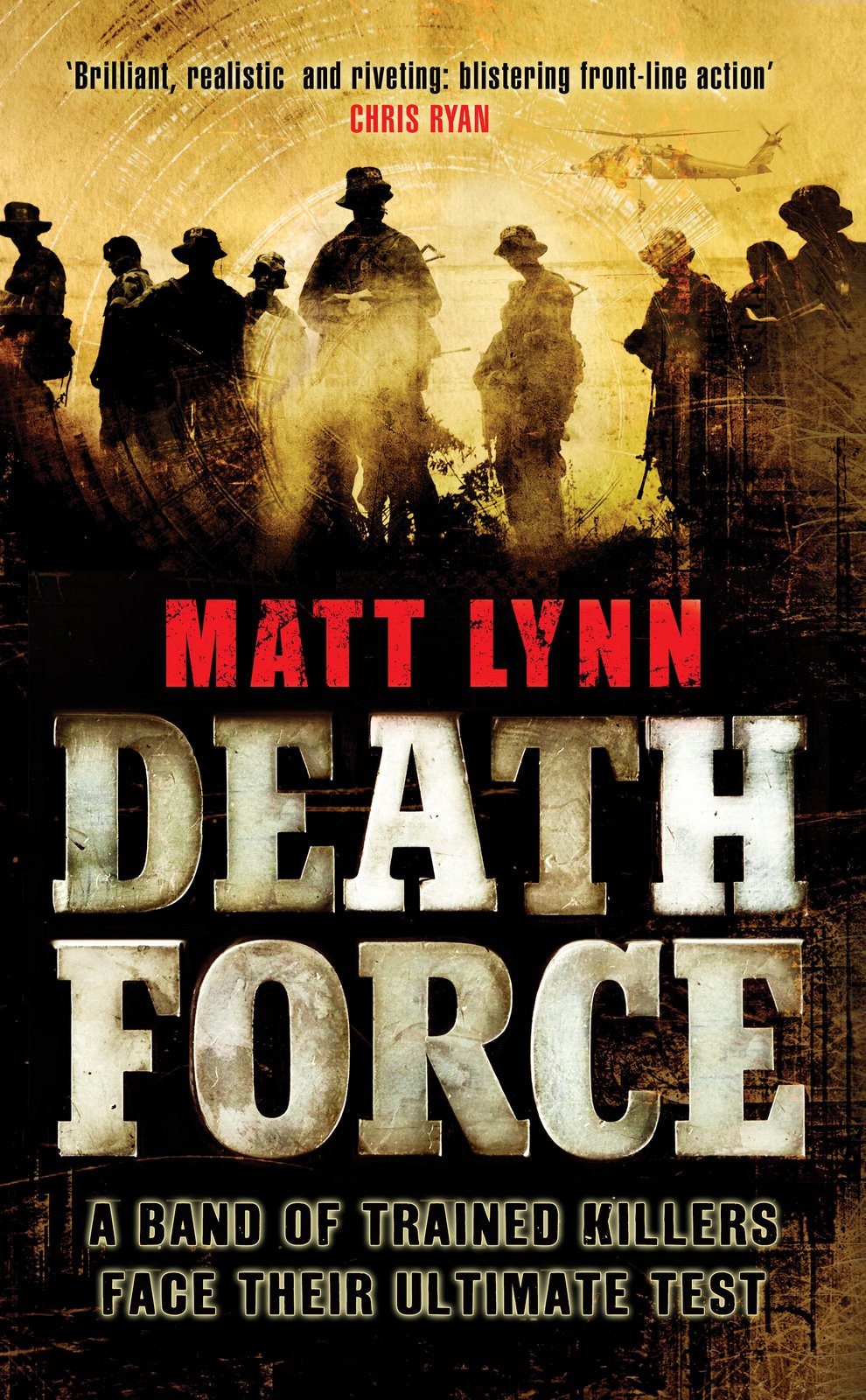
That does, of course, mean the writer has to create believable detail. You need to make it real, without overdoing the travelogues. The best way is to focus on little things. When I was writing about Helmand in Afghanistan for Death Force, for example, I mentioned the smell of the wild irises that grow in the mountains along the Afghan-Pakistan border. In Ice Force, I’ve mentioned the grinding noise that the plates of ice moving beneath you make as you trudge towards the North Pole.
The atmosphere has to be woven into every sentence you write.
And, of course, it helps if it is snowing outside while you are doing it.
One of the things you have to do as writer is create a believable atmosphere. Books vary, of course. Some are set in very, ordinary everyday locations -- the suburbs, for example. I like to set my books in fairly exotic places. I think that is part of the appeal of the adventure-action thriller genre. There is a big element of escapism in these books. Nobody wants to escape to Swindon. They want the book to take them somewhere exciting, and preferably dangerous as well.
That does, of course, mean the writer has to create believable detail. You need to make it real, without overdoing the travelogues. The best way is to focus on little things. When I was writing about Helmand in Afghanistan for Death Force, for example, I mentioned the smell of the wild irises that grow in the mountains along the Afghan-Pakistan border. In Ice Force, I’ve mentioned the grinding noise that the plates of ice moving beneath you make as you trudge towards the North Pole.
The atmosphere has to be woven into every sentence you write.
And, of course, it helps if it is snowing outside while you are doing it.
Tuesday, 12 October 2010
We Die Alone
One of the pleasures of writing for a living is that you come across all kinds of unexpected stuff. I’ve been getting stuck into the writing of ‘Ice Force’, the forth book in the Death Force series. As you might guess from the title, its set in the Arctic. To get my mind into the right place, I’ve been reading as much polar stuff as I get my hands on.
Most of it is exploration stories, and its useful for the atmosphere, and survival techniques. But not much has been written about Arctic warfare. Eventually, I stumbled across a book called ‘We Die Alone’, which was written in the early 1950s by David Howarth. It tells the story of Jan Baalstrud, a fairly ordinary Norwegian guy during the Second World War. He signs up with the British Army, and is sent on a commando mission into the far north of Norway. It goes terribly wrong from the start, the rest of his unit is killed, and he has to trek a massive distance chased by Nazis to escape.
The brilliance of the book is in its descriptions of Arctic warfare, and the endurance and fortitude of its hero. And it reminds you of what an extraordinary conflict WWII was, and how many ordinary people were caught up in extraordinary events.
The scene where Jan saws off his toes with a bread knife and a bottle of brandy to prevent them getting frostbite is memorable.
It’s now been reissued, with a forward by Andy McNab – and highly recommended.
Most of it is exploration stories, and its useful for the atmosphere, and survival techniques. But not much has been written about Arctic warfare. Eventually, I stumbled across a book called ‘We Die Alone’, which was written in the early 1950s by David Howarth. It tells the story of Jan Baalstrud, a fairly ordinary Norwegian guy during the Second World War. He signs up with the British Army, and is sent on a commando mission into the far north of Norway. It goes terribly wrong from the start, the rest of his unit is killed, and he has to trek a massive distance chased by Nazis to escape.
The brilliance of the book is in its descriptions of Arctic warfare, and the endurance and fortitude of its hero. And it reminds you of what an extraordinary conflict WWII was, and how many ordinary people were caught up in extraordinary events.
The scene where Jan saws off his toes with a bread knife and a bottle of brandy to prevent them getting frostbite is memorable.
It’s now been reissued, with a forward by Andy McNab – and highly recommended.
Wednesday, 23 June 2010
A Life or Death Match....
I was talking to my editor Martin Fletcher at Headline yesterday about the next book in the ‘Death Force’ series, which is going to be called ‘Ice Force’. The outline is looking great. But we were discussing whether one of the character should die, as they have done in each of the previous three books in the series.
We decided one should.
But who?
We picked a pair of characters, and decided to kill off one if England beat Slovenia today. And another if they get beaten.
So it really is a life or death match.
We decided one should.
But who?
We picked a pair of characters, and decided to kill off one if England beat Slovenia today. And another if they get beaten.
So it really is a life or death match.
Subscribe to:
Posts (Atom)




 Posts
Posts


