Over at the International Thriller Writers site, I'm taking part in a round table on how much research is enough. Here's what I had to say - but take a look at the rest of the discussion.
I think research is one of those things where it helps to have experience. As CE Lawrence quite rightly points out, it is easy for the research to show too much on the page. A writer needs to know their subject, and to have a real feel for it. They need to know their characters as well, and have a real feel for the kinds of things they would think and feel and say as well. But they don’t have to have a text-book knowledge of everything they are writing about.
I suspect that attitudes to research have changed over the years as well. When I was writing ‘Fire Force’, which is a book set amongst mercenaries in Africa, I went back and re-read some of the classics of the genre. For example, I re-read ‘The Dogs of War’ by Frederick Forsyth. I can remember reading it when it came out, when I would have been about ten, and loving it. But today it seems like a really dull book, mainly because there is just too much research in it. The hero spends ages and ages setting up the mission. He regularly travels to Brussels to set up false bank accounts – by train and ferry, for Heaven’s sake, which takes up many pages. He doesn’t even get a plane. In the end, it just makes for what today seems a really dull read.
By contrast, ‘The Da Vinci Code’ is a poorly researched book. There are plenty or mistakes. Indeed, Westminster Abbey in London even had to issue a guidebook for tourists correcting some of the factual errors because so many tourists came in asking about them. But who cares? It’s a really good book – and it certainly sold well.
Thirty years ago, I think people expected thrillers to be very research-driven. But not right now. Today the key is to create your characters, and your story, and then do the research that is necessary to get things right. But this is fiction – its the plot and the people that really count.
Showing posts with label international thriller writers. Show all posts
Showing posts with label international thriller writers. Show all posts
Monday, 18 April 2011

Monday, 17 January 2011
How To Plan A Book
Over on the International Thriller Writer's site I've been leading a discussion on whether to plan a novel in advance. Here's my contribution, but you can read the rest of the debtate there.
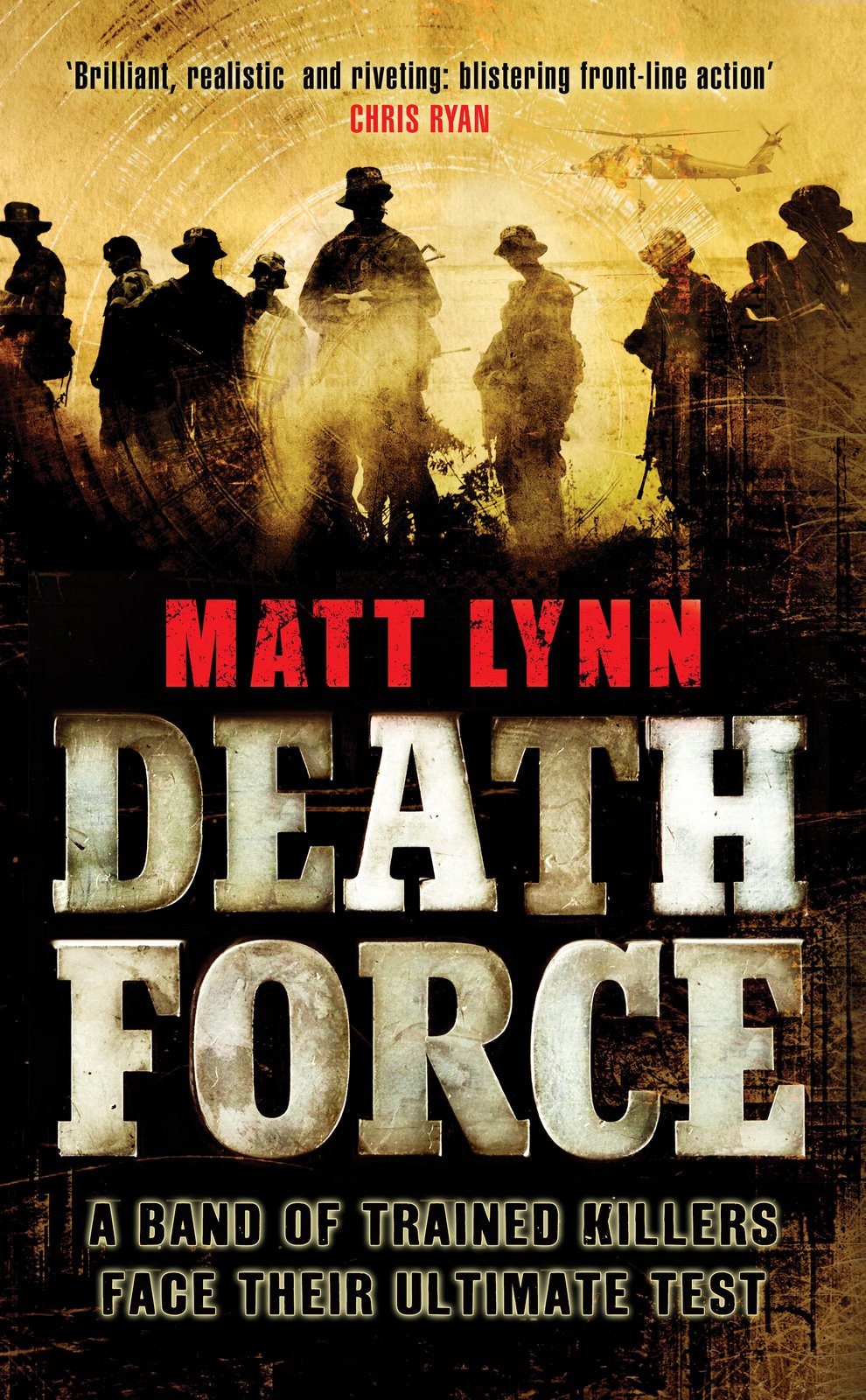
Before starting the ‘Death Force’ series a couple of years ago, I spent about five years as a ghost-writer for Random House. I churned out seven action-adventure thrillers, books that were supposedly written by spies and special forces guys.
In many ways it was a frustrating experience. You get quite well-paid, but you don’t get any credit for your work.
But it did teach me one really useful thing – the importance of planning your plot.
When you are ghost-writing, you need to get the ‘author’ and publisher on board. The last thing I wanted to do was spend months on a book, and then get told it wasn’t what they wanted. So I started writing incredibly detailed outlines. I’d do a 15,000 word outline for a 100,000 word book. Every chapter and incident would be detailed, bits of dialogue, and character development. Then I’d make sure everyone was signed up to it.
And you know what. I found it was a tremendous discipline. It forced me to really think ruthlessly about where the plot was going. It forced me to think hard about turning point, and twists, and to fitting the characters into the story. And it made me much better at chucking things out – I could edit much more fiercely on an outline than I ever could on a finished manuscript.
So now that I am writing my own books I still do these incredibly detailed outlines.
And that has two big advantages.
First, the plots are much better. They start in the right place, they are tighter and leaner, and more exciting.
Second, when I’m writing the actually book, I don’t have to worry about plot and structure because that is already done. I can focus on jokes, dialogue, one-liners, terrific action descriptions, and all the other stuff that goes into a first-class thriller.
So if there is one piece of advice I would always give an aspiring writer it is – plan, plan, plan.
Before starting the ‘Death Force’ series a couple of years ago, I spent about five years as a ghost-writer for Random House. I churned out seven action-adventure thrillers, books that were supposedly written by spies and special forces guys.
In many ways it was a frustrating experience. You get quite well-paid, but you don’t get any credit for your work.
But it did teach me one really useful thing – the importance of planning your plot.
When you are ghost-writing, you need to get the ‘author’ and publisher on board. The last thing I wanted to do was spend months on a book, and then get told it wasn’t what they wanted. So I started writing incredibly detailed outlines. I’d do a 15,000 word outline for a 100,000 word book. Every chapter and incident would be detailed, bits of dialogue, and character development. Then I’d make sure everyone was signed up to it.
And you know what. I found it was a tremendous discipline. It forced me to really think ruthlessly about where the plot was going. It forced me to think hard about turning point, and twists, and to fitting the characters into the story. And it made me much better at chucking things out – I could edit much more fiercely on an outline than I ever could on a finished manuscript.
So now that I am writing my own books I still do these incredibly detailed outlines.
And that has two big advantages.
First, the plots are much better. They start in the right place, they are tighter and leaner, and more exciting.
Second, when I’m writing the actually book, I don’t have to worry about plot and structure because that is already done. I can focus on jokes, dialogue, one-liners, terrific action descriptions, and all the other stuff that goes into a first-class thriller.
So if there is one piece of advice I would always give an aspiring writer it is – plan, plan, plan.
Monday, 10 January 2011
Why Stories Matter...
Over at The International Thriller Writers Website, I've been leading a discussion on why stories matter. You can read the other contributions there, but here's what I had to say.
Why do stories matter? It’s a good question for a writer to ask themselves. If you made cars, or taught kindergarten, or worked as a farmer, it would be much easier. Your work matters because people need it. It fulfils some function. But do people need stories? What function do they have?
You could argue – not much. After all, they are just a made up series of events.
I think they do have a function. After all, we’ve been telling stories ever since cavemen sat around the first camp fires. Probably a fair numbers of those stories were thrillers (featuring hair-raising bison chases, and the inevitable double-dealing Neanderthal). A fair number would have been romances as well. It must be the case that stories perform some kind of useful function, otherwise they wouldn’t have been a feature of very human society we’ve ever known. Their function might not be obvious, like a spade, but that doesn’t mean it isn’t there.
So what is it? In my view, the function of a story is to make sense of the world. Its takes the chaos and randomness of life and gives it some sort of shape and purpose. In fiction, there are no co-incidences, and no loose ends. That isn’t always terribly realistic. But it is a lot more satisfying for the reader because it helps to make the world seem a more structured, ordered place than it probably really is. It helps make us feel our lives move towards a destination, rather than just wander around. Along the way they may also be entertaining, diverting, amusing and sometimes even educational. But that is their core function – and realising that helps you to become a better writer.
Why do stories matter? It’s a good question for a writer to ask themselves. If you made cars, or taught kindergarten, or worked as a farmer, it would be much easier. Your work matters because people need it. It fulfils some function. But do people need stories? What function do they have?
You could argue – not much. After all, they are just a made up series of events.
I think they do have a function. After all, we’ve been telling stories ever since cavemen sat around the first camp fires. Probably a fair numbers of those stories were thrillers (featuring hair-raising bison chases, and the inevitable double-dealing Neanderthal). A fair number would have been romances as well. It must be the case that stories perform some kind of useful function, otherwise they wouldn’t have been a feature of very human society we’ve ever known. Their function might not be obvious, like a spade, but that doesn’t mean it isn’t there.
So what is it? In my view, the function of a story is to make sense of the world. Its takes the chaos and randomness of life and gives it some sort of shape and purpose. In fiction, there are no co-incidences, and no loose ends. That isn’t always terribly realistic. But it is a lot more satisfying for the reader because it helps to make the world seem a more structured, ordered place than it probably really is. It helps make us feel our lives move towards a destination, rather than just wander around. Along the way they may also be entertaining, diverting, amusing and sometimes even educational. But that is their core function – and realising that helps you to become a better writer.
Wednesday, 17 November 2010
Advice To Budding Thriller Writers.
I’m still really enjoying the round-table discussions hosted over at the International Thriller Writers website. This week, they are discussing the one piece of advice you would give budding thriller writers.
So what would my advice be?
First, learn about structure. Thrillers are very mechanical. They need great engineering. They are a bit like cars in that respect. They can look beautiful, but if they don’t work properly, then what’s the point (unless it’s a Jag, of course, in which case we’ll overlook the fact it doesn’t work).
So the most important thing you need to do is learn about structure and pace and plot. For my money, the best way to do that is to take an early Frederick Forsyth novel, and go through it again and again until you have learned absolutely what he is doing. Then do it for yourself. It’s a bit like taking a BMW apart, then re-assembling. If you do that enough times, you will figure out how to make a car. Same with a thriller.
Next, get with the times. Thrillers are stories of events. They reflect the world around them. So don’t write an old-fashioned Cold War spy thriller. Think about private military corporations (my subject). Or financial conspiracies. Or Iran. Or piracy. But make it something now and fresh we haven’t read about before.
Okay, that’s two pieces of advice – but both valuable.
So what would my advice be?
First, learn about structure. Thrillers are very mechanical. They need great engineering. They are a bit like cars in that respect. They can look beautiful, but if they don’t work properly, then what’s the point (unless it’s a Jag, of course, in which case we’ll overlook the fact it doesn’t work).
So the most important thing you need to do is learn about structure and pace and plot. For my money, the best way to do that is to take an early Frederick Forsyth novel, and go through it again and again until you have learned absolutely what he is doing. Then do it for yourself. It’s a bit like taking a BMW apart, then re-assembling. If you do that enough times, you will figure out how to make a car. Same with a thriller.
Next, get with the times. Thrillers are stories of events. They reflect the world around them. So don’t write an old-fashioned Cold War spy thriller. Think about private military corporations (my subject). Or financial conspiracies. Or Iran. Or piracy. But make it something now and fresh we haven’t read about before.
Okay, that’s two pieces of advice – but both valuable.
Tuesday, 9 November 2010
Why I Write Thrillers...
The International Thriller Writers website has started a series of online round-table discussions about thriller writing – sort of like a conference panel, bit without all the travelling.
I’ll be taking part in a couple of the upcoming discussions. But I think the first in the series looks really good: ‘Why Do You Read/Write Thrillers’.
It’s a fascinating issue for any writer. I mean, obviously I love thrillers. But I don’t only love thrillers. There are loads of different kinds of books I really enjoy, and I would be just as happy to write.
In the discussion, I think Todd Ritter gives the best answer when he says: “Reading a thriller that makes my pulse race takes me briefly into a world of danger and fear and excitement that I won’t experience in real life. It’s an escape and, well, a thrill”.
Still, that is more of an answer to the question of why you read thrillers rather than why you write them.
For me, I think the answer is that the thriller is such a great canvass. They are widescreen stories. They have action, characters, jokes and drama, but they can also take in politics, economics, war, technology, and international relations. They are very outwards looking books, which weave stories out of current events, but which also, at their best, are timeless. Other genres tend to be much smaller scale, rooted in one place or time.
But I guess every thriller writer will have a different answer to the question.
I’ll be taking part in a couple of the upcoming discussions. But I think the first in the series looks really good: ‘Why Do You Read/Write Thrillers’.
It’s a fascinating issue for any writer. I mean, obviously I love thrillers. But I don’t only love thrillers. There are loads of different kinds of books I really enjoy, and I would be just as happy to write.
In the discussion, I think Todd Ritter gives the best answer when he says: “Reading a thriller that makes my pulse race takes me briefly into a world of danger and fear and excitement that I won’t experience in real life. It’s an escape and, well, a thrill”.
Still, that is more of an answer to the question of why you read thrillers rather than why you write them.
For me, I think the answer is that the thriller is such a great canvass. They are widescreen stories. They have action, characters, jokes and drama, but they can also take in politics, economics, war, technology, and international relations. They are very outwards looking books, which weave stories out of current events, but which also, at their best, are timeless. Other genres tend to be much smaller scale, rooted in one place or time.
But I guess every thriller writer will have a different answer to the question.
Saturday, 1 May 2010
The Big Thrill....
There's an interview with me about Fire Force on The Big Thrill website. You can read it here...
Sunday, 1 February 2009
The Big Thrill Features Death Force
Death Force is highlighted in this month's issue of The Big Thrill. You can read about it here.
Subscribe to:
Posts (Atom)




 Posts
Posts


