If you haven’t bough one of the new Kindles yet, I really recommend it. It’s lighter than the old one, which makes it completely portable, but it is just as slickly designed, easy to read, and simple to use.
But I’ve noticed one thing about it. It fits perfectly into inside breast pocket of a man’s jacket. I’m a fairly averaged sized bloke – 42 jacket size if you must know – so I guess that is true for most men.
This is a more important point than most people realise. Men don’t normally have anywhere they can carry a book around. We don’t have handbags. Jacket and coat pockets are two small for printed books (unless you are going for the intellectual look, in which case you might have a copy of Camus stuffed into a big, grey coat). Unlike women, we don’t have anywhere we can slip a book away that we can read on the bus, or waiting for a meeting, or whatever.
On the whole women read more than men – that’s why women’s fiction sells more than men’s fiction. I’m not suggesting the Kindle is a male device – I’ve seen loads of women reading them on the train.
But it might well encourage men to read as much as women – which can only be a good thing.
Saturday, 29 October 2011

Saturday, 22 October 2011
Authors as Entrepreneurs
We tend to think of authors as fairly reclusive characters. The word ‘bookish’ summons up images of fairly self-absorbed, introverted characters, with a slight detachment from the real world. And from the authors I have met, I would say that is, in the most, a fairly accurate characterisation. Some were larger than life – Dickens, perhaps, and certainly Hemmingway – but they also led largely artistic careers.
Now, however, something is changing.
Authors are becoming entrepreneurs.
The books industry has changed. Even when you are published by one of the big houses – Headline in my case – you still need to do a lot of marketing of yourself to make sure your book finds an audience. You need to build a website, get on Twitter, and give talks. There is no point in expecting the publisher to do it all for you.
And, more and more authors are turning to Kindle as well. They are bringing out their own books, and promoting then themselves, either entirely on their own, or in conjunction with traditionally published books. They are in effect setting up small businesses.
One consequence, however, is that the books we all read will be increasingly produced by people who are as much entrepreneurs as writers. That may well not be a bad thing. A lot of fiction in the last half-century has been very inward-looking. It doesn’t have much of the energy and involvement in the world of Victorian fiction.
But it certainly means that the types of books that get written are going to be very different.
Now, however, something is changing.
Authors are becoming entrepreneurs.
The books industry has changed. Even when you are published by one of the big houses – Headline in my case – you still need to do a lot of marketing of yourself to make sure your book finds an audience. You need to build a website, get on Twitter, and give talks. There is no point in expecting the publisher to do it all for you.
And, more and more authors are turning to Kindle as well. They are bringing out their own books, and promoting then themselves, either entirely on their own, or in conjunction with traditionally published books. They are in effect setting up small businesses.
One consequence, however, is that the books we all read will be increasingly produced by people who are as much entrepreneurs as writers. That may well not be a bad thing. A lot of fiction in the last half-century has been very inward-looking. It doesn’t have much of the energy and involvement in the world of Victorian fiction.
But it certainly means that the types of books that get written are going to be very different.
Thursday, 6 October 2011
Making It Worthwhile
There’s always plenty for writers to moan about. Not having our books prominently displayed in the bookshop for example. A miserable sales ranking on Amazon. And that’s before we even get started on the publishers and agents.
But every so often something comes along to make it feel worthwhile.
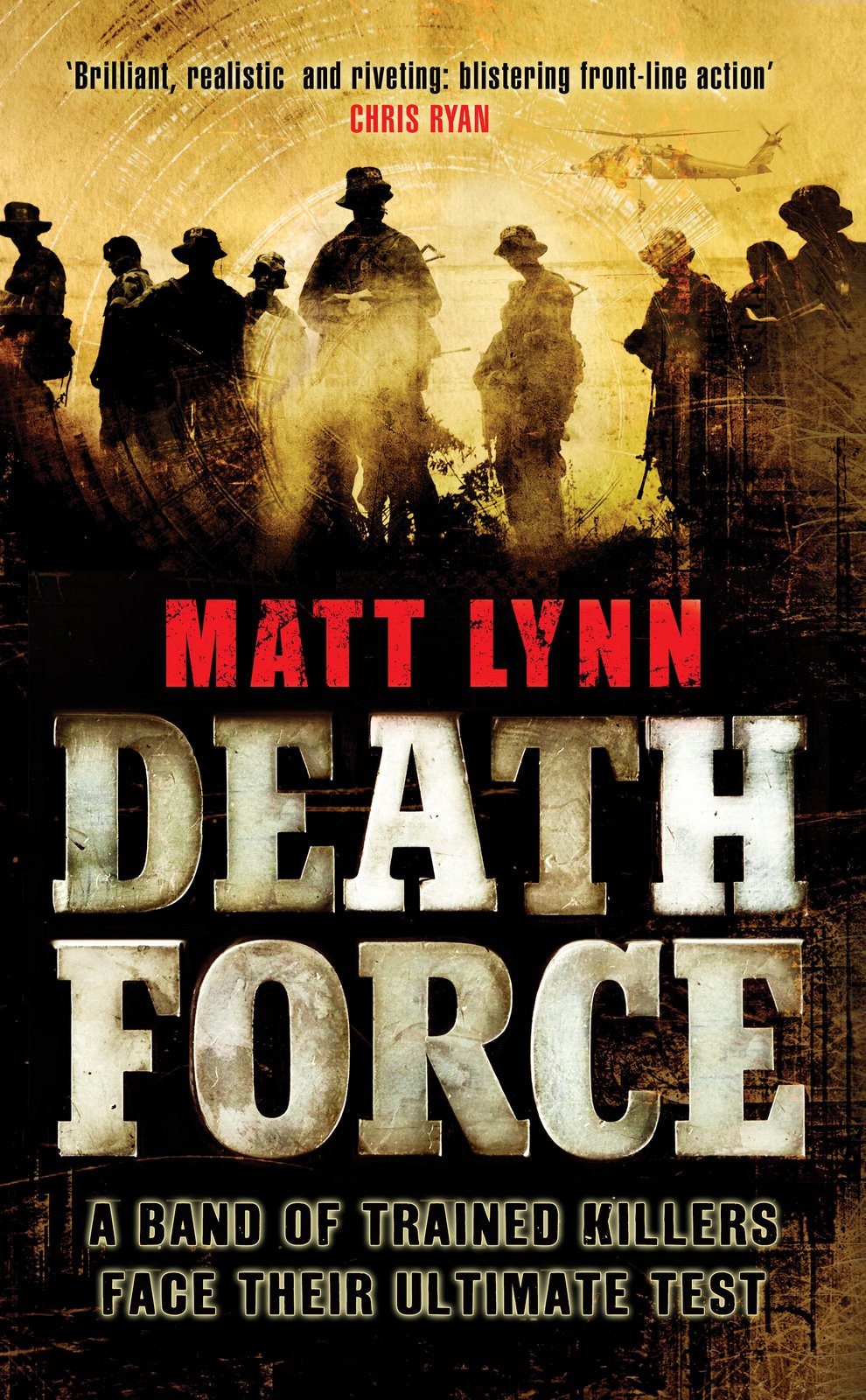
A couple of weeks ago I got an e-mail from a women who’s son was very unwell. He wouldn’t be having much of a birthday, she said, and his situation made it hard for him to get out and meet people. But he was a big fan of my first two books, Death Force and Shadow Force. And he would really like it if I sent him a birthday card.
In fact, I sent him a signed copy of Shadow Force.
It’s nice to know your work has got through to someone enough that they would be pleased to hear from you, even though they don’t know you. I guess that is what all writers aspire to.
I hope he has a good day.
But every so often something comes along to make it feel worthwhile.
A couple of weeks ago I got an e-mail from a women who’s son was very unwell. He wouldn’t be having much of a birthday, she said, and his situation made it hard for him to get out and meet people. But he was a big fan of my first two books, Death Force and Shadow Force. And he would really like it if I sent him a birthday card.
In fact, I sent him a signed copy of Shadow Force.
It’s nice to know your work has got through to someone enough that they would be pleased to hear from you, even though they don’t know you. I guess that is what all writers aspire to.
I hope he has a good day.
Saturday, 1 October 2011
A Stupid Tax on E-Books
E-Books are the best thing that have happened to writers since…well, probably the invention of instant coffee. Sure, there is a lot of nervousness among publishers and bookshop owners and that is understandable. But for writers, they can only be good news. At the flick of a switch, you have a global market. Far more of the money generated goes to the writer. And it opens up markers for all sorts of new kinds of work.
There is one glaring injustice, however. E-books carry VAT, whereas printed books are tax-free.
That is just short-sighted greed on the part of the Treasury. A petition has been started up on the government’s website calling for its abolition. As it rightly points out, e-books are far more environmentally-friendly than the old, paper sort. No trees get cut down. No vans drive them around the country. A book is a book, regardless of the form of delivery. It is crazy to discriminate in favour of one kind through the tax system.
I’d add another point. I bet e-books can be a huge industry for the UK. We have great writers, English is the world’s language, and we have the editors and entrepreneurs who can seize the market. And yet the Government is taxing e-books unfairly – which almost certainly means the industry won’t develop as fast as it otherwise would. Bonkers.
I’ve already signed the petition, but there are only 2,500 so far. So click on the link and add your name today.
There is one glaring injustice, however. E-books carry VAT, whereas printed books are tax-free.
That is just short-sighted greed on the part of the Treasury. A petition has been started up on the government’s website calling for its abolition. As it rightly points out, e-books are far more environmentally-friendly than the old, paper sort. No trees get cut down. No vans drive them around the country. A book is a book, regardless of the form of delivery. It is crazy to discriminate in favour of one kind through the tax system.
I’d add another point. I bet e-books can be a huge industry for the UK. We have great writers, English is the world’s language, and we have the editors and entrepreneurs who can seize the market. And yet the Government is taxing e-books unfairly – which almost certainly means the industry won’t develop as fast as it otherwise would. Bonkers.
I’ve already signed the petition, but there are only 2,500 so far. So click on the link and add your name today.
Tuesday, 20 September 2011
Swearing in Books
I had an e-mail this morning from a reader who said he was a big fan of my books, which was nice of course. But he also pointed out that the characters in the Death Force series used the word ‘sodding’ all the time, and it got a bit repetitive.
He’s right, of course. They do, and it is.
There is a reason, however. They are soldiers. In real life it would be fu%£kig this and f!c£king that. And for some reason, I don’t think swearing works very well in books. I don’t have anything against it in real life, and it can work fine in films, but I print it somehow falls flat.
So I use sodding instead.
But maybe that doesn’t quite work either?
He’s right, of course. They do, and it is.
There is a reason, however. They are soldiers. In real life it would be fu%£kig this and f!c£king that. And for some reason, I don’t think swearing works very well in books. I don’t have anything against it in real life, and it can work fine in films, but I print it somehow falls flat.
So I use sodding instead.
But maybe that doesn’t quite work either?
Thursday, 1 September 2011
Real-Time Story-Telling

The Kindle is a huge opportunity for writers. It is not just a new way of distributing our work. It is also an opportunity to tell stories in a new way. I’m just launching a new series of e-book only novellas called Black Ops. The first one is called Black Ops: Libya, so it is fairly obvious where it is set. The idea, however, is to tell stories ripped straight from the headlines, and put them out instantaneously.
The e-book allows us to do that. Traditional publishing takes a year at least to get a book to the market. So the instant thriller, which is what the Black Ops series aims to be, takes advantage of the technology to tell a story that has the advantage of immediacy. It is real-time story-telling.
In the first one, an ex-SAS guy called Alex Marden and a former Navy Seal called Jack Rogan are dropped into Libya by NATO to retrieve a document in the hands of the old regime that would be hugely embarrassing to the British and American governments if it fell into the wrong hands.
But they soon get themselves caught up in the fighting and chaos as Tripoli falls to the rebels.
It is a cracking adventure story. And the first time anyone has taken advantage of the e-book to try something like this.
Monday, 15 August 2011
The Possibilities on Kindle
The Kindle is one of the most interesting things happening in publishing right now. Not all of it is good, of course. The publishing industry may end getting destroyed the way the music industry was. But it also creates possibilities.
There is a fascinating story in the New York Times about the thriller writer Richard North Patterson. He has a book out featuring Osama Bin Laden. But by the time it came out, the man had already been killed, which rather ruined his book. So he went onto the Kindle edition and changed it - just like that.
One of the things the Kindle can do for us is create that kind of journalistic immediacy. In fact, it is a possibility I am working on right now. But more on that later....
There is a fascinating story in the New York Times about the thriller writer Richard North Patterson. He has a book out featuring Osama Bin Laden. But by the time it came out, the man had already been killed, which rather ruined his book. So he went onto the Kindle edition and changed it - just like that.
One of the things the Kindle can do for us is create that kind of journalistic immediacy. In fact, it is a possibility I am working on right now. But more on that later....
Subscribe to:
Posts (Atom)




 Posts
Posts


