If you look at the Kindle chart and the traditional charts, you’ll notice something quite interesting. They aren’t at all similar. The UK Kindle chart today is topped by Phil Rickman, who is hardly a household name, followed by Damon Galgut and Kerry Wilkinson. The physical chart is led by the latest Wimpy Kid, followed by Jamie Oliver, Lee Evans and Michael Connolly.
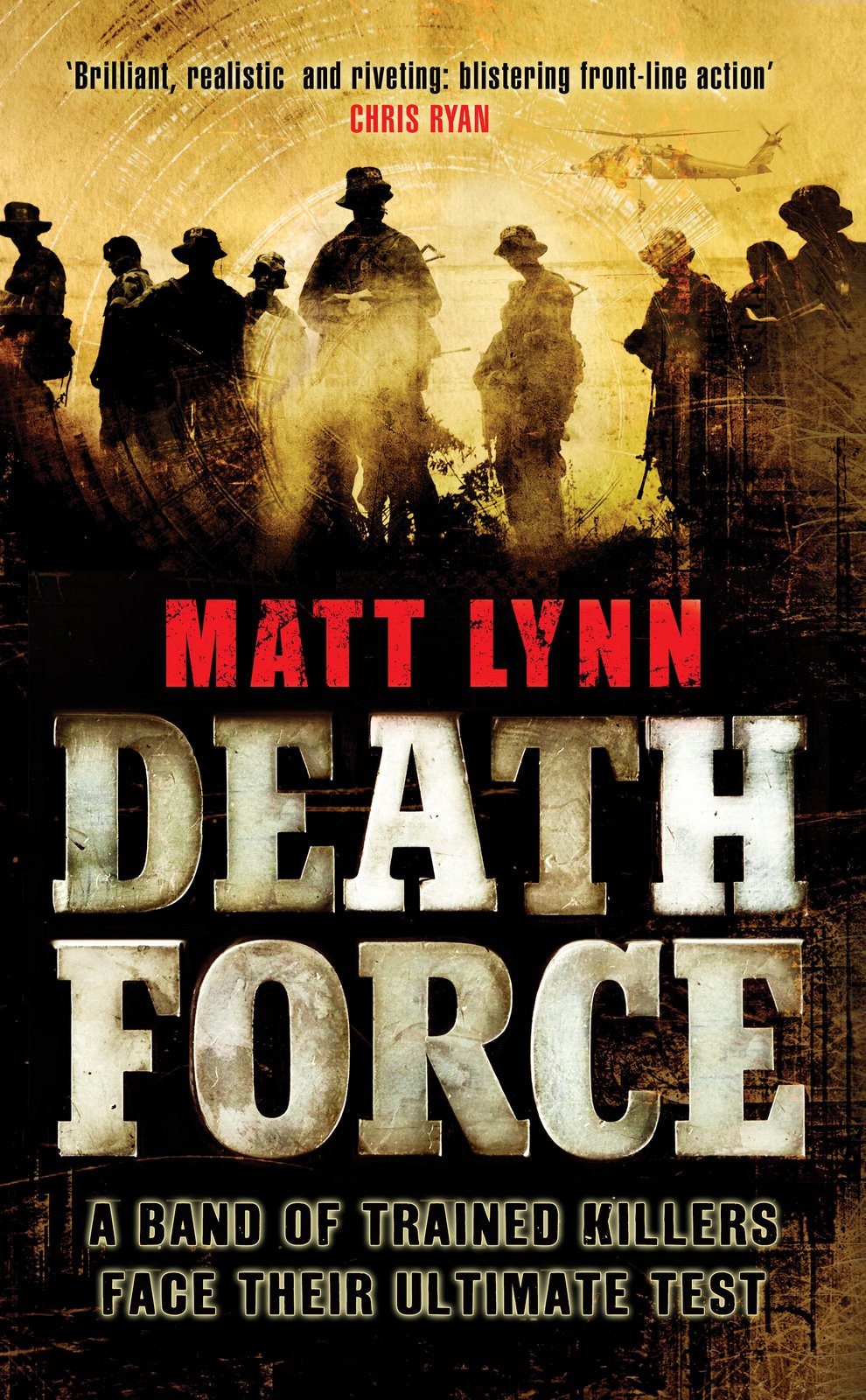
Why is that, I wonder? After all, these are all books. Of course you can probably discount Wimpy Kid and Jamie Oliver. Most kids don’t have e-readers yet and cookbooks aren’t a natural for the Kindle. Even so, if you look at the Kindle charts, the ‘big authors’ don’t do so well. PD James and Kathryn Stockett are in the Top 10 and Patricia Cornwell in the Top 20. But heavily hyped writers like James Paterson don’t really do that well. In my own corner of the market, military adventure, I don’t sell as well as Chris Ryan and Andy McNab in the bookshops, but on Kindle I am regularly out-selling them.
One reason might be that the Kindle audience is slightly different from the mainstream audience. It is probably slightly more male – hence the number of thrillers in the chart – and a bit more techie. It may also be more adventurous in its taste.
But the real reason, I suspect, is because it is a much more level playing field. Some books get more push than others online of course. But going into the Kindle store is nothing like going into a bookshop, and nothing at all like the books section of a supermarket. The choice is vast, there are no in-your-face promotions, and word-of-mouth (in the form of reader reviews) is everywhere.
So what we see on the Kindle chart may well be a far better guide to what people actually want to read. I’m not sure the publishers have quite realised that yet though.
Showing posts with label kindle. Show all posts
Showing posts with label kindle. Show all posts
Sunday, 4 December 2011

Monday, 28 November 2011
How Many Kindles Are Out There?
At the moment, I’m spending a lot of time setting up my new digital publishing venture, Endeavour Press. One of the things that interests me is, how many Kindles are out there. Amazon reported today that over the holiday weekend in the US it had sold four times as many Kindles as it did last year. But, rather irritatingly, it doesn’t actually say how many.
Figures are surprisingly hard to come by. For 2010, the estimates from the analysts are that five to eight million Kindles were sold. Let’s take a median figure, and called it 6.5 million. If Amazon has quadrupled those sales this time around – and based on anecdotal evidence, that sounds realistic – then it should sell around 26 million this year.
Add in the 2010 sales, and, after Xmas there could be 32 million Kindles out there globally. That’s about half the population of the UK. More significantly, I bet nearly all of those people are keener than average readers. After all, there isn’t much point in getting one if you only read on James Patterson book a year. You need to be a 5-10 books a year minimum reader to make the investment worthwhile.
So what proportion of heavy book readers will have a Kindle by 2012? I’d estimate about 40%. That’s what makes this market so fascinating.
Figures are surprisingly hard to come by. For 2010, the estimates from the analysts are that five to eight million Kindles were sold. Let’s take a median figure, and called it 6.5 million. If Amazon has quadrupled those sales this time around – and based on anecdotal evidence, that sounds realistic – then it should sell around 26 million this year.
Add in the 2010 sales, and, after Xmas there could be 32 million Kindles out there globally. That’s about half the population of the UK. More significantly, I bet nearly all of those people are keener than average readers. After all, there isn’t much point in getting one if you only read on James Patterson book a year. You need to be a 5-10 books a year minimum reader to make the investment worthwhile.
So what proportion of heavy book readers will have a Kindle by 2012? I’d estimate about 40%. That’s what makes this market so fascinating.
Saturday, 19 November 2011
The Return of Pulp Fiction
The most interesting thing happening in writing right now is the way the Kindle is breaking down old barriers. It is creating a lot of new space for writers, and, rather surprising, it is also bringing back some old forms.
One is the long essay, which is really just a recreation of the polemical pamphlet. The other is the e-novella, which is really the heir to pulp fiction.
Pulp fiction flourished as the ‘penny dreadfuls’, lurid, sensationalist tales that filled Victorian and Edwardian railway bookshops in Britain, and in the ‘pulp fiction’ story magazines that were hugely successful in the US right up until the 1960s.
Both specialised in genre fiction, usually written fast by highly professional writers. The stories ere disposable, shocking, and attention-grabbing. And they were sold cheaply.
Look at the Kindle charts and you’ll see a lot of stuff is very similar. Lots of fairly sensationalist cheap fiction.
In effect, new technology has bought pulp fiction back to life.
The interesting point I think is that some great writing emerged from that tradition. The Victorian penny dreadfuls contained plenty of rubbish and so did the American pulp magazines.
But those magazines also provided the foundation for some great writers. Raymond Chandler, Zane Grey, Rider Haggard, and many others. Upton Sinclair was at one point knocking out 8,000 words a day for the pulps.
They allowed writers to write a lot, to develop characters, and push genres. At the moment, Kindle is allowing writers to do something very similar. There is a lot of rubbish, of course, but I suspect when we look back in fifty or a hundred years time we will decide that a lot of the most interesting work is being done for Kindle, just as it was in for the pulps in the past.
One is the long essay, which is really just a recreation of the polemical pamphlet. The other is the e-novella, which is really the heir to pulp fiction.
Pulp fiction flourished as the ‘penny dreadfuls’, lurid, sensationalist tales that filled Victorian and Edwardian railway bookshops in Britain, and in the ‘pulp fiction’ story magazines that were hugely successful in the US right up until the 1960s.
Both specialised in genre fiction, usually written fast by highly professional writers. The stories ere disposable, shocking, and attention-grabbing. And they were sold cheaply.
Look at the Kindle charts and you’ll see a lot of stuff is very similar. Lots of fairly sensationalist cheap fiction.
In effect, new technology has bought pulp fiction back to life.
The interesting point I think is that some great writing emerged from that tradition. The Victorian penny dreadfuls contained plenty of rubbish and so did the American pulp magazines.
But those magazines also provided the foundation for some great writers. Raymond Chandler, Zane Grey, Rider Haggard, and many others. Upton Sinclair was at one point knocking out 8,000 words a day for the pulps.
They allowed writers to write a lot, to develop characters, and push genres. At the moment, Kindle is allowing writers to do something very similar. There is a lot of rubbish, of course, but I suspect when we look back in fifty or a hundred years time we will decide that a lot of the most interesting work is being done for Kindle, just as it was in for the pulps in the past.
Saturday, 29 October 2011
Will The Kindle Get Men to Read More?
If you haven’t bough one of the new Kindles yet, I really recommend it. It’s lighter than the old one, which makes it completely portable, but it is just as slickly designed, easy to read, and simple to use.
But I’ve noticed one thing about it. It fits perfectly into inside breast pocket of a man’s jacket. I’m a fairly averaged sized bloke – 42 jacket size if you must know – so I guess that is true for most men.
This is a more important point than most people realise. Men don’t normally have anywhere they can carry a book around. We don’t have handbags. Jacket and coat pockets are two small for printed books (unless you are going for the intellectual look, in which case you might have a copy of Camus stuffed into a big, grey coat). Unlike women, we don’t have anywhere we can slip a book away that we can read on the bus, or waiting for a meeting, or whatever.
On the whole women read more than men – that’s why women’s fiction sells more than men’s fiction. I’m not suggesting the Kindle is a male device – I’ve seen loads of women reading them on the train.
But it might well encourage men to read as much as women – which can only be a good thing.
But I’ve noticed one thing about it. It fits perfectly into inside breast pocket of a man’s jacket. I’m a fairly averaged sized bloke – 42 jacket size if you must know – so I guess that is true for most men.
This is a more important point than most people realise. Men don’t normally have anywhere they can carry a book around. We don’t have handbags. Jacket and coat pockets are two small for printed books (unless you are going for the intellectual look, in which case you might have a copy of Camus stuffed into a big, grey coat). Unlike women, we don’t have anywhere we can slip a book away that we can read on the bus, or waiting for a meeting, or whatever.
On the whole women read more than men – that’s why women’s fiction sells more than men’s fiction. I’m not suggesting the Kindle is a male device – I’ve seen loads of women reading them on the train.
But it might well encourage men to read as much as women – which can only be a good thing.
Thursday, 1 September 2011
Real-Time Story-Telling

The Kindle is a huge opportunity for writers. It is not just a new way of distributing our work. It is also an opportunity to tell stories in a new way. I’m just launching a new series of e-book only novellas called Black Ops. The first one is called Black Ops: Libya, so it is fairly obvious where it is set. The idea, however, is to tell stories ripped straight from the headlines, and put them out instantaneously.
The e-book allows us to do that. Traditional publishing takes a year at least to get a book to the market. So the instant thriller, which is what the Black Ops series aims to be, takes advantage of the technology to tell a story that has the advantage of immediacy. It is real-time story-telling.
In the first one, an ex-SAS guy called Alex Marden and a former Navy Seal called Jack Rogan are dropped into Libya by NATO to retrieve a document in the hands of the old regime that would be hugely embarrassing to the British and American governments if it fell into the wrong hands.
But they soon get themselves caught up in the fighting and chaos as Tripoli falls to the rebels.
It is a cracking adventure story. And the first time anyone has taken advantage of the e-book to try something like this.
Tuesday, 5 July 2011
Launching Onto Kindle....
The Kindle is a fantastic device for readers, but it potentially is even more interesting for writers. It isn’t so much the ability to reach readers directly, as the opportunity it offers to try out new forms. The publishers and the bookshops are all focused on the 100,000 word book. But there are lots of other ways of writing things.
I’ve just launched by first short story on Kindle. It’s called ‘Lethal Force’. It would be free, but Amazon won’t let me give it away, so instead it is 71p. It will be free in iTunes just as soon as I can get Smashwords to give it an ISBN number and get it up. Take a look, you might enjoy it.
But it isn’t just short stories that can find a home on Kindle. There are other forms of writing as well.
I already have one idea, which I’m working on right now. Watch this space…..
I’ve just launched by first short story on Kindle. It’s called ‘Lethal Force’. It would be free, but Amazon won’t let me give it away, so instead it is 71p. It will be free in iTunes just as soon as I can get Smashwords to give it an ISBN number and get it up. Take a look, you might enjoy it.
But it isn’t just short stories that can find a home on Kindle. There are other forms of writing as well.
I already have one idea, which I’m working on right now. Watch this space…..
Wednesday, 22 December 2010
Subscribe to:
Posts (Atom)




 Posts
Posts


