About the most interesting thing happening in the book trade right now is that the lines between traditional publishing and self-publishing are getting blurred. My Death Force series is published by Hodder Headline, but my Black Ops series of novellas I am bringing out myself.
More and more writers, so far as I can tell, are going down that road.
One indicator of that this week was the decision by the International Thriller Writer’s Association to allow its members to post the details of their self-published work up on their website. Until now, they had only allowed work bought out major publishers.
A hybrid model is emerging I suspect where writers do some work for major publishers, and some work for themselves, probably forming their own judgements on what mix will maximise their sales, income and creative satisfaction.
Personally I like the combination. I value the prestige of the mainstream publisher, and seeing my books in the shops. But I like the energy and immediacy of doing my own thing as well. And, I suspect I’ll soon be making more money as well.
But how exactly this is all going to work, however, no one really knows.
Showing posts with label publishing. Show all posts
Showing posts with label publishing. Show all posts
Sunday, 6 November 2011

Saturday, 29 October 2011
Will The Kindle Get Men to Read More?
If you haven’t bough one of the new Kindles yet, I really recommend it. It’s lighter than the old one, which makes it completely portable, but it is just as slickly designed, easy to read, and simple to use.
But I’ve noticed one thing about it. It fits perfectly into inside breast pocket of a man’s jacket. I’m a fairly averaged sized bloke – 42 jacket size if you must know – so I guess that is true for most men.
This is a more important point than most people realise. Men don’t normally have anywhere they can carry a book around. We don’t have handbags. Jacket and coat pockets are two small for printed books (unless you are going for the intellectual look, in which case you might have a copy of Camus stuffed into a big, grey coat). Unlike women, we don’t have anywhere we can slip a book away that we can read on the bus, or waiting for a meeting, or whatever.
On the whole women read more than men – that’s why women’s fiction sells more than men’s fiction. I’m not suggesting the Kindle is a male device – I’ve seen loads of women reading them on the train.
But it might well encourage men to read as much as women – which can only be a good thing.
But I’ve noticed one thing about it. It fits perfectly into inside breast pocket of a man’s jacket. I’m a fairly averaged sized bloke – 42 jacket size if you must know – so I guess that is true for most men.
This is a more important point than most people realise. Men don’t normally have anywhere they can carry a book around. We don’t have handbags. Jacket and coat pockets are two small for printed books (unless you are going for the intellectual look, in which case you might have a copy of Camus stuffed into a big, grey coat). Unlike women, we don’t have anywhere we can slip a book away that we can read on the bus, or waiting for a meeting, or whatever.
On the whole women read more than men – that’s why women’s fiction sells more than men’s fiction. I’m not suggesting the Kindle is a male device – I’ve seen loads of women reading them on the train.
But it might well encourage men to read as much as women – which can only be a good thing.
Tuesday, 30 November 2010
Don't Attack The Customers
I’m not one of those writers who worries about digital books, the decline of the local bookshop, or the closure of libraries. We are story-tellers, and there has always been a demand for stories, and an enthusiastic audience for them. How they are delivered – round a campfire, on a printed page, or on an electronic screen – doesn’t make much difference.
What does worry me is that the publishing industry might repeat some of the mistakes of the music business.
In The Bookseller today, Richard Mollet, the chief executive of the Publishers Association, is demanding that the Internet Service Providers should be clamping down on piracy.
This is the wrong route.
With my other hat as a business journalist on I’ve written a lot about the decline of the big music labels. What they got wrong was trying to sue their main customers – the music fans who download music. But a business can’t constantly be treating its customers like criminals. It doesn’t make any sense.
Interestingly, the music business is in pretty good shape. Total spending on music, when you add up CD sales, licensing fees, downloads and live performance earnings, has been going up over the last few years. It’s just the old music labels that have been struggling – largely because they couldn’t figure out to deal with a changed market.
I hope the publishers don’t end up going down the same road.
The story-telling business is in good shape, even if the delivery changes. But attacking our customers is not the right way to respond.
What does worry me is that the publishing industry might repeat some of the mistakes of the music business.
In The Bookseller today, Richard Mollet, the chief executive of the Publishers Association, is demanding that the Internet Service Providers should be clamping down on piracy.
This is the wrong route.
With my other hat as a business journalist on I’ve written a lot about the decline of the big music labels. What they got wrong was trying to sue their main customers – the music fans who download music. But a business can’t constantly be treating its customers like criminals. It doesn’t make any sense.
Interestingly, the music business is in pretty good shape. Total spending on music, when you add up CD sales, licensing fees, downloads and live performance earnings, has been going up over the last few years. It’s just the old music labels that have been struggling – largely because they couldn’t figure out to deal with a changed market.
I hope the publishers don’t end up going down the same road.
The story-telling business is in good shape, even if the delivery changes. But attacking our customers is not the right way to respond.
Tuesday, 26 October 2010
Don't Diss Jane Austen....
Jane Austen has been getting some flak in the press, although I guess she can survive it. An academic has been studying her letters, noted how confused they are, and how different they are from her books, and concluded that her editor must have done a lot of re-writes on her books.
That story got lots of play in newspapers, and on the web. For some reason, people like the notion that authors don’t really write their own stuff, and there is some team of the people in the publishing house who actually put the book together
But anyway, whoever came up with this piece of research obviously knows very little about how writers actually work. There is a big difference between the writing we do for a living, which on the whole we take very seriously, edit and polish and worry about, and the writing we do like everyone else, which is dashed off without much thought.
Now obviously I don’t have much in common with Austen. I’m better at tank battles, for starters. Plus I’m still alive. But my e-mails, letters, Xmas cards, and indeed blog entries might well lead you to conclude that I couldn’t possibly have written my books either.
But, of course I did. And so, of course, did Jane Austen.
That story got lots of play in newspapers, and on the web. For some reason, people like the notion that authors don’t really write their own stuff, and there is some team of the people in the publishing house who actually put the book together
But anyway, whoever came up with this piece of research obviously knows very little about how writers actually work. There is a big difference between the writing we do for a living, which on the whole we take very seriously, edit and polish and worry about, and the writing we do like everyone else, which is dashed off without much thought.
Now obviously I don’t have much in common with Austen. I’m better at tank battles, for starters. Plus I’m still alive. But my e-mails, letters, Xmas cards, and indeed blog entries might well lead you to conclude that I couldn’t possibly have written my books either.
But, of course I did. And so, of course, did Jane Austen.
Tuesday, 5 October 2010
Judging A Book By Its Cover,,,

One of the questions writers get asked is how much they say they have over their covers. To which the simple answer is: About as much say as we do over the weather.
My experience is that publishers send you the cover, and then whilst theoretically you could throw a tantrum and say you didn’t like it, that probably wouldn’t be a very welcome response.
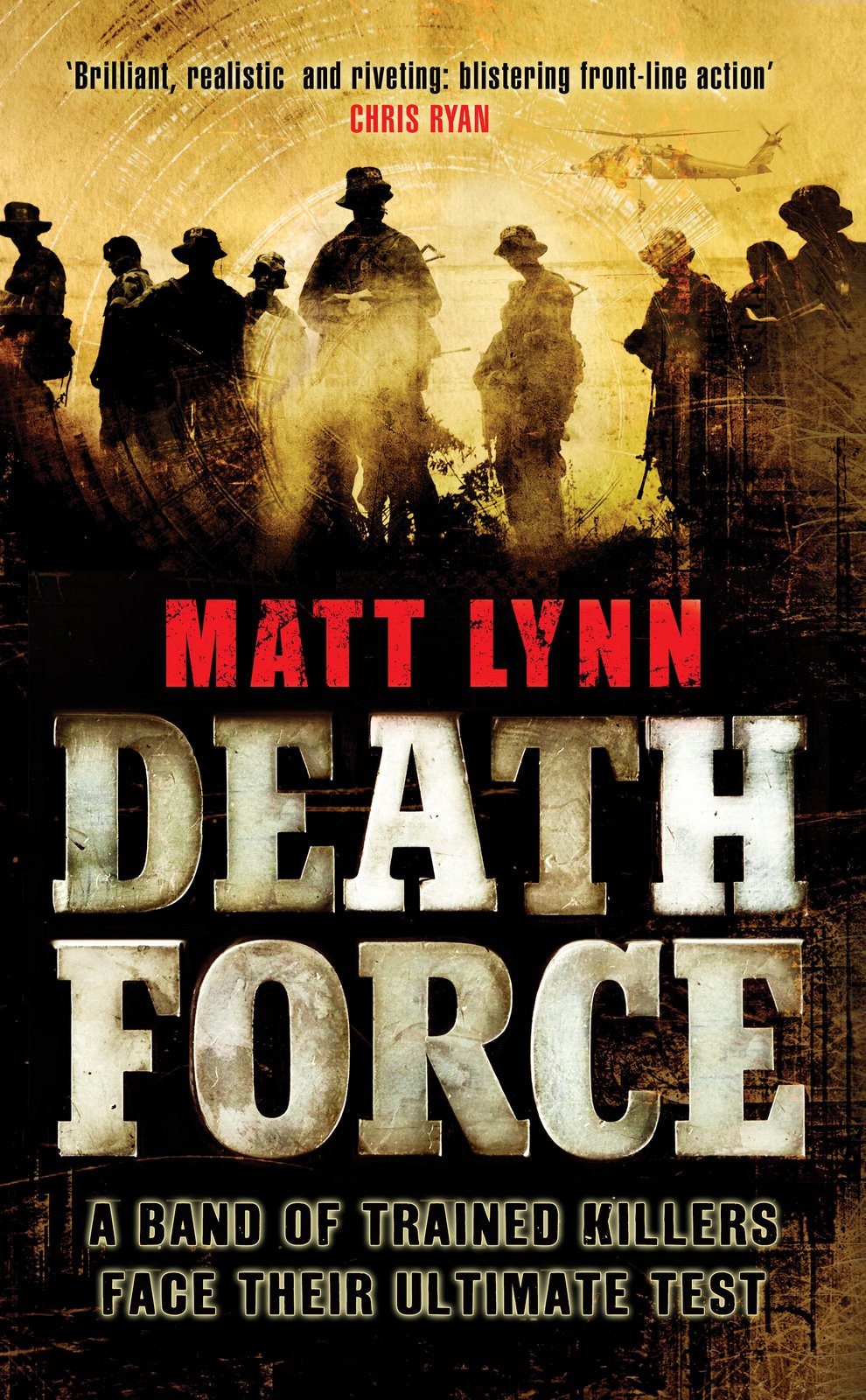
Fortunately, I’ve never been in a position where I haven’t like a cover. I’ve just received the jacket for ‘Shadow Force’ and I think it’s fantastic: exciting, direct, in keeping with the previous two books in the series, but different enough to mark out its own space. (Then again, when a book is about mercenaries and pirates, it’s quite hard not to come up with a decent jacket).
And, of course, authors shouldn’t assume they know what is the best cover for their book. The editor and the illustrator will have their own take on it, and how it fits into the market, who it is going to appeal to, and how it will stand out from the rest of the books on the market.
That said, it would be awful to see a cover you really didn’t like on your book. After all, it is the most obvious statement about your work.
Tuesday, 9 February 2010
Should Authors Remain Obscure?
Stephen Glover wrote an interesting piece in the The Independent yesterday, contrasting JD Salinger and Martin Amis. His point was that sometimes obscurity helps a writer. Salinger hid himself away, whilst Amis of course is massively over-exposed.
He may well have a point. I like Amis, as it happens (the early stuff anyway, just like everyone else). But I'm bored with his new book already, and it isn't even out yet. I'm probably less likely to buy it than I would be if it didn't have all the hype.
I think authors have a difficult balance to stike here. We're all terrified of under-exposure, ecsue there is such pressure to hit sales targerts, that we don't worry enough about the dangers of over-exposure.
He may well have a point. I like Amis, as it happens (the early stuff anyway, just like everyone else). But I'm bored with his new book already, and it isn't even out yet. I'm probably less likely to buy it than I would be if it didn't have all the hype.
I think authors have a difficult balance to stike here. We're all terrified of under-exposure, ecsue there is such pressure to hit sales targerts, that we don't worry enough about the dangers of over-exposure.
Tuesday, 3 November 2009
Ghosting for Slebs,,,,
Lynda La Plante created a stir at the recent Specsavers Crime & Thriller Awards with an attack on 'celebrity' fiction by the likes of Katie Price, Martine McCutcheon, and soon, heaven help us, Cheryl Cole.
She chewed up the assembled publishers for spending their money on 'drivel' rather than supporting real authors. "The publishing industry is going to implode. They can't pay the millions to these celebrities," she complained.
In the Telegraph, Nigel Farndale wrote a perceptive piece about her attack, arguing that ghost-writed rubbish for Slebs was as likely to put off young people from reading as encouraging them. And Martin Amis is planning to make Price a character in his next novel (I'm looking forward to that).
One point that people miss however is that ghost-writing is far more common than people realise. And the readers are, essentially, getting ripped off.
In fairness, someone like Katie Price makes no pretence of writing her books. The ghost gets credit, and is well-known.
But, as someone who did a fair bit of ghost-writing before writing 'Death Force', I am well aware that is far more widespread than most people realise. Quite a few of the thrillers on the best-sellers list are ghosted by 'authors' who actually claim to the writers of the books.
That strikes me, looking back on the experience, as far more deceitful.
There is no question that the books are a lot worse than the writer could do if they were working under their own name. The first couple of books I ghosted I took quite a lot of care over. But after doing it for a about five years, I was just churning them out fairly cynically for the money. The 'author' couldn't be bothered with the book, nor could the editor, and, after a while, nor could I. The plots were full of holes, the characters weird, and the typos horrendous: in one of them, even the dedication was mis-spelt, although I was probably the only person who noticed.
So people are gettting a sub-standard, slap-dash book, that no one really cares about.
And it is very hard to see how anyone really benefits from that.
With another hat on, I spend a fair bit of time as a business journalist.
And one thing you notice that really distinguishes good businesses from bad ones is that the they care about making a decent product.
The publishers putting out sleb fiction seem to have forgotten that. I suspect at some point they will pay a fairly heavy price.
She chewed up the assembled publishers for spending their money on 'drivel' rather than supporting real authors. "The publishing industry is going to implode. They can't pay the millions to these celebrities," she complained.
In the Telegraph, Nigel Farndale wrote a perceptive piece about her attack, arguing that ghost-writed rubbish for Slebs was as likely to put off young people from reading as encouraging them. And Martin Amis is planning to make Price a character in his next novel (I'm looking forward to that).
One point that people miss however is that ghost-writing is far more common than people realise. And the readers are, essentially, getting ripped off.
In fairness, someone like Katie Price makes no pretence of writing her books. The ghost gets credit, and is well-known.
But, as someone who did a fair bit of ghost-writing before writing 'Death Force', I am well aware that is far more widespread than most people realise. Quite a few of the thrillers on the best-sellers list are ghosted by 'authors' who actually claim to the writers of the books.
That strikes me, looking back on the experience, as far more deceitful.
There is no question that the books are a lot worse than the writer could do if they were working under their own name. The first couple of books I ghosted I took quite a lot of care over. But after doing it for a about five years, I was just churning them out fairly cynically for the money. The 'author' couldn't be bothered with the book, nor could the editor, and, after a while, nor could I. The plots were full of holes, the characters weird, and the typos horrendous: in one of them, even the dedication was mis-spelt, although I was probably the only person who noticed.
So people are gettting a sub-standard, slap-dash book, that no one really cares about.
And it is very hard to see how anyone really benefits from that.
With another hat on, I spend a fair bit of time as a business journalist.
And one thing you notice that really distinguishes good businesses from bad ones is that the they care about making a decent product.
The publishers putting out sleb fiction seem to have forgotten that. I suspect at some point they will pay a fairly heavy price.
Tuesday, 6 October 2009
Are The Public Fed Up With Rubbish Yet
Maybe this is wishful thinking, but there are signs that the reading public may be getting fed up with some of the pap the publishers have been pushing at them in the last few years.
The Bookseller reports, via The Sun, that bookshops are a little reluctant to stock the new Katie Price book, her fourth in five years.
Even if you accept that Price is worth one memoir, maybe even two, four is probably pushing it a bit, even by the standards of Random House.
Meanwhile, I'm not sure the James Patterson word factory is quite the Toyota-style paragon of efficiency it should be either. Alex Cross's Trial drops back from 2 to 7 in the hardback charts this week, according to The Times.
Patterson has some talent, but by churning out formulaic, ghost-written thrillers he isn't doing anyone any favours. Least of all himself.
One of the purposes of The Curzon Group is to promote quality popular fiction - our own, obviously, but also other people's. It's encouraging to think that the reading public is fed up with cynical, ghost-written pap. We might even be on to something.
The Bookseller reports, via The Sun, that bookshops are a little reluctant to stock the new Katie Price book, her fourth in five years.
Even if you accept that Price is worth one memoir, maybe even two, four is probably pushing it a bit, even by the standards of Random House.
Meanwhile, I'm not sure the James Patterson word factory is quite the Toyota-style paragon of efficiency it should be either. Alex Cross's Trial drops back from 2 to 7 in the hardback charts this week, according to The Times.
Patterson has some talent, but by churning out formulaic, ghost-written thrillers he isn't doing anyone any favours. Least of all himself.
One of the purposes of The Curzon Group is to promote quality popular fiction - our own, obviously, but also other people's. It's encouraging to think that the reading public is fed up with cynical, ghost-written pap. We might even be on to something.
Tuesday, 29 September 2009
Getting Published...
Over on the terrific Crime Time website, The Curzon Group have been jointly explaining how we came to get published. It's an astute choice of subject. Every writer will know that the question you get asked most frequently is how you interest a publisher in your book.
The answers are revealing - and you can read them on the site, so there is no need to repeat them here.
But there are, I think, some common themes.
One is to know the market. Publishers are commercial operations, and they publish what sells.
Next, know their list. You might have written a great military thriller, but if they've already got one of those on their list, they won't want to publish you as well. Look for their gaps, then fill them.
Finally, persevere. Don't take no for an answer.
Of course, that said, it's a completely chaotic industry, in which no one really knows anything. So as soon as you set down any rules, they are likely to be broken.
The answers are revealing - and you can read them on the site, so there is no need to repeat them here.
But there are, I think, some common themes.
One is to know the market. Publishers are commercial operations, and they publish what sells.
Next, know their list. You might have written a great military thriller, but if they've already got one of those on their list, they won't want to publish you as well. Look for their gaps, then fill them.
Finally, persevere. Don't take no for an answer.
Of course, that said, it's a completely chaotic industry, in which no one really knows anything. So as soon as you set down any rules, they are likely to be broken.
Tuesday, 27 May 2008
French book prices
As someone who is interested both in the book trade, as an author, and economics, as a journalist, I find it extraordinary that the French as still debating whether to change their version of the net boook agreement - and, according to a report in The Bookseller, look like keeping it.
Nothing could better illustrate why France remains in the dark ages. After price controls were abolished in the UK, we got Waterstone's, Border's etc - big friendly bookshops that made buying book a pleasant experience. I also think Tesco, Asda are doing a lot for the books business - after all at £3.50 a book is a small, tempting luxury when you are out shopping. By contrast, has anyone ever seen a decent bookshop in France? Or read a French author recently? The British bookselling industry might be frustrating but it miles ahead of the French.
Nothing could better illustrate why France remains in the dark ages. After price controls were abolished in the UK, we got Waterstone's, Border's etc - big friendly bookshops that made buying book a pleasant experience. I also think Tesco, Asda are doing a lot for the books business - after all at £3.50 a book is a small, tempting luxury when you are out shopping. By contrast, has anyone ever seen a decent bookshop in France? Or read a French author recently? The British bookselling industry might be frustrating but it miles ahead of the French.
Subscribe to:
Posts (Atom)




 Posts
Posts


