We kept getting told that deflation is the greatest threat facing the economy. In my Moneyweek column this week, I'm suggesting we shouldn't be so sure about that. Here's a taster....
Like a last-minute twist in a movie, March turned out not to be the first month of deflation after all. Despite widespread predictions of the first fall in prices for half a century, the Retail Price Index was stuck at precisely zero percent.
All the experts ready to warn us about how deflation was the greatest threat since the black death had to put their lectures on hold. The wise-sounding reminders about Japan’s ‘lost decade’ had to be wrapped up for another month. But they won’t go away. As more and more money is printed, we’ll carry on being told that the threat of stuff getting cheaper is the real danger the global economy faces.
It’s nonsense. The truth is, there is nothing to fear about deflation. Indeed, it has been central bankers’ paranoid and irrational fear of falling prices that has helped to land us in this mess in the first place. To start clawing our way out of the economic crisis the world needs to start learning to accept there is nothing wrong with prices dropping occasionally.
Deflation is fairly simple phenomenon. It means prices going down a bit year on year, rather than going up. Our Victorian ancestors would have found nothing very odd about that. In the 19th century, according to statistics published by the House of Commons library, prices went up some years, then down in others. In 1854, for example, prices rose by 15%, then came down by 8.4% in 1858. The net result was that in 1914, prices were roughly the same as they had been a century earlier. By contrast, prices have risen every year since 1945, making an aggregate rise of 22 times.
Most people might think stable or falling prices sounds quite good. A whole army of economists, however, keep telling us how terrible it is. On close examination, however, it turns out that most the arguments against it are remarkably threadbare.
We keep getting told that it will hurt the economy because it will force people to postpone decisions. Why buy that sofa today if it will be cheaper in six months time? Demand will collapse, and people will be thrown out of jobs.
The trouble is, it’s not really true. If it was, we wouldn’t have a computer or electronics industry. Both are subject to savage price deflation, and yet are among the most innovative and fastest-growing businesses in the world. The reality is that people adjust. They know they can buy a better and cheaper PC in six in six months time. Against that, they really want one right now. Quite quickly a balance is struck.
True, deflation is bad for people who’ve borrowed lots of money. The debt stays the same whilst their income may go down. That will hurt. Against that, however, they could always try working a bit harder, and paying back their debts honestly, rather than letting inflation do the job for them.
Then there is the upside of deflation, about which we hear remarkably little. Whilst it is bad for borrowers, it is good for savers, who find themselves getting magically richer year on year rather than poorer. It may well have a positive impact on consumption as well, despite what we kept being told. After all, if you reckon that falling prices will be make you slightly richer next year, why not spend a bit more now?
In truth, deflation, like any other economic event, is fairly neutral. It has winners and losers. Its gets a bad press largely because the losers are a lot more powerful than the winners.
Deflation is bad news for the chief executives of big companies. So long as there is some inflation out there, they can push prices steadily upwards, and keep profits growing without doing very much. They can even slip through some stealth pay cuts for the workers by increasing their wages at slightly less than the inflation rate. With deflation, none of that is possible.
It is even worse news for the City. One of the main ways the financial industry makes money is through inflation. Without it, the private equity firms would be completely finished. So would most of the hedge funds (who rely just as much on debt). Inflation usually means savers – the customers, that is – get clobbered, whilst borrowers – the city institutions – get rich.
And, of course, it is great for the government. It gets stealth tax rises (by leaving thresholds where they are). And it sees its vast debts quickly wiped out. Deflation would hammer the Chancellor of the Exchequer before anyone.
The people who it benefits – mostly small savers and ordinary consumers – are far less powerful.
That doesn’t mean they should be ignored, however.
Indeed, fighting deflation is one of the ways we got into this mess.
The past decade should, looking back, have been a period of gradually falling prices. Globalisation, and particularly the integration of India and China into the developed economy, put a lot of downward pressure on costs. So did technological change: computers have made lots of things cheaper to produce. In the U.K.’s case, the strong pound was another factor – with everything we import getting cheaper, prices on the high street should have been falling.
Overall, prices by 2007 should have been 5% or so less than in 1997.
But central banks fought that. In thrall to a paranoid fear of deflation, they kept printing more and more money to stave it off. They succeeded, as we know. The price, however, was a massive asset price bubble. Now that it has burst, the world has been plunged into recession.
It would have been far better to accept a short period of deflation, ignoring the industrialists and financiers who warned it would lead to catastrophe. And you know what? It still would be.
Saturday, 28 March 2009

Wednesday, 25 March 2009
Another Step to Meltdown
The UK economy is taking a step closer to meltdown every day. The gilts auction failed today. It seems no one wants to buy British government debt yet. And we haven't even started issuing the stuff yet. Hang onto your hats.
The Business School Scam
On Bloomberg today I've been writing about Business Schools and the role they played in creating the credit crunch. It is probably harsh to blame them completely. But, as one person who e-mailed me pointed out, their fees and exclusivity created the bubble in which much of the business world has lived for the past decade. I mean, it does seem extraordinary that Andy Hornby, formerly CEO of HBOS, could have an MBA from Harvard and not realise there was something wrong with the way the bank was being run.
Tuesday, 24 March 2009
The UK Takes A Step Closer to Meltdown
Although the chances of it are not more than 10% or 15%, there is a meltdonwn scenario for the UK. It is that inflation rises sharply, the currency collapses and the Bank of England has to hike interest rates sharply to control inflation. Then the economy would be in real trouble. It came a step closer today with the news that inflation roese despite the recession. Could it happen. Probably not. But it is a scary prospect, and even it doesn't, 1970s stag-flation is the best the UK can look forward to right now.
Bankers & Bonuses
I was on France 24 last night discussing banks and bonues. You can watch it here. Although I tend to agree with the view that the arguments over bonuses are a distraction from fixing the economy, it's also true that public upport for banking rescues won't be sustainable whilst these huge bonuses are being paid. So something does have to be done about it.
Saturday, 21 March 2009
Should Tax Havens Be Banned
In the run-up to the G20, there is lots of debate about tax havens. Everyone from Gordon Brown to Barack Obama is trying to ban them. There is a typcially thoughful piece by John Kay in the FT, and by my Bloomberg colleage Celestine Bohlen. My own view is that they are being picked on unfairly and made a scapehoat, a point I've been elaborating on in Moneyweek. Here's a taster....
Well, at least that is one thing cleared up. You might have imagined the credit crunch, and the sharp slowdown in the global economy, had something to do with the bursting of a credit bubble, lenders that ran out of control, and regulators and central bankers who turned out to be asleep at the wheel.
But no. It turns out it is all the fault of a few tiny state-lets such as Monaco, Liechtenstein and Andorra.
In the run up to the G20 summit to be held in Britain next month, prime ministers, chancellors and presidents have been launching blistering attack on the tax havens. “All jurisdictions must come within the rules,” the British Prime Minister Gordon Brown announced last week at a press conference in London with the German Chancellor Angela Merkel. “Standards that are being applied in some jurisdictions are too low. This is the beginning of the end of tax havens, and that is good news for everyone.”
The new U.S. President Barack Obama has set his sights just as squarely on the same target. He has promised to raise an additional $210 in taxes from American citizens and companies by cracking down the way money is pushed through offshore centres.
And there is plenty of evidence that the principalities and state-lets under attack are starting to buckle under the pressure. In the past month, Switzerland, Liechtenstein, Andorra and Monaco have all promised to change their banking laws. Territories such as Jersey and the Bahamas may not be far behind. Banking secrecy in the offshore industry is about to be consigned to history.
But hold on. There are two problems here. First, there is absolutely no evidence to suggest that the tax havens had any role in creating the financial crisis. And, in making them the scapegoat, we risk throwing away freedoms that we should all guard far more carefully.
Let’s start with the contention that offshore centres played a role in the credit crunch. So far, no one has been able to come up with a single shred of evidence to suggest why that might be so.
True, many of the sub-prime mortgages, off-balance sheet vehicles and derivatives contracts that played a role in the crisis may have been nominally offshore. But that is largely incidental. There is hardly a single complex deal struck anywhere in the world that doesn’t involve an offshore centre somewhere in the chain. It doesn’t follow that the use of tax havens created the crisis.
After all, the problems in the British banking industry were caused by lenders such as Northern Rock, Bradford & Bingley and HBOS completely abandoning prudent lending rules. It was buy-to-let mortgages in Leeds, and self-cert loans in Swansea, that caused the trouble – not debts run up by bankers in Jersey or brass-plate companies in the Cayman Islands. The problem was not that banks hid what they were doing. It was the regulators didn’t ask the right questions.
In reality, the politicians are playing two tricks with their attacks on the havens, both of them completely disreputable. They are creating a smokescreen designed to distract attention from the failures of the regulatory systems they created. And they are desperately looking for ways to shore up tax revenues that are starting to crumble as the recession bites.
There has been a long-running campaign to clamp down on tax havens. The Germans have led the way, with a series of bullying attacks on Liechtenstein, a favourite of wealthy Germans. Now Britain and the U.S., which are becoming high-tax countries as well, are joining the attacks.
And yet, the charges commonly levelled at the haven are entirely bogus.
For all the allegations about harbouring money launders and undermining global tax systems, we should remember that the havens in question, whilst they might not be full-blown nations, are sovereign entities. They are entitled to as much respect as any other small country.
So Germany, for example, has a perfect right to set whatever laws it likes for people living in Germany. If it wants to ban its citizens from holding accounts -- or setting up trusts and foundations -- in other countries, it can do so (and deal with the flight of people and capital that would certainly result). But it isn’t entitled to harass other countries into changing their laws – and neither is Britain or the U.S. If people want to put their money into a low-cost, low-tax country, that surely is their business.
There is no substance to the ludicrous charge, regularly peddled by campaigners against tax havens, that this is somehow ‘unfair’ tax competition. All competition is unfair. It is unfair that the Germans make terrific cars, causing all kinds of problems for everyone else’s auto industry. It is ‘unfair’ that the Italians make great suits, or the French terrific wine. Perhaps they should be stopped from doing that to make it easier for other countries. Absurd? Then why should Liechtenstein or Jersey be forced to close their financial-services industry?
Nor is there any evidence that they are used by money launders or terrorists any more than any other financial centre. Serious terrorists use everyday banks because they attract less attention. Third-world dictators will always find somewhere to park the odd billion.
In truth, the growth of the offshore industry has been driven by higher, more complex taxes in Europe and increasingly in the U.S. as well. Since becoming Chancellor more than a decade ago, Brown has turned one of the simplest tax systems in Europe into one of the most complicated. Obama is set on the same path in the U.S. Instead of picking on very small countries, Brown, Merkel and Obama would be better off using the G20 summit to start fixing their own.
Well, at least that is one thing cleared up. You might have imagined the credit crunch, and the sharp slowdown in the global economy, had something to do with the bursting of a credit bubble, lenders that ran out of control, and regulators and central bankers who turned out to be asleep at the wheel.
But no. It turns out it is all the fault of a few tiny state-lets such as Monaco, Liechtenstein and Andorra.
In the run up to the G20 summit to be held in Britain next month, prime ministers, chancellors and presidents have been launching blistering attack on the tax havens. “All jurisdictions must come within the rules,” the British Prime Minister Gordon Brown announced last week at a press conference in London with the German Chancellor Angela Merkel. “Standards that are being applied in some jurisdictions are too low. This is the beginning of the end of tax havens, and that is good news for everyone.”
The new U.S. President Barack Obama has set his sights just as squarely on the same target. He has promised to raise an additional $210 in taxes from American citizens and companies by cracking down the way money is pushed through offshore centres.
And there is plenty of evidence that the principalities and state-lets under attack are starting to buckle under the pressure. In the past month, Switzerland, Liechtenstein, Andorra and Monaco have all promised to change their banking laws. Territories such as Jersey and the Bahamas may not be far behind. Banking secrecy in the offshore industry is about to be consigned to history.
But hold on. There are two problems here. First, there is absolutely no evidence to suggest that the tax havens had any role in creating the financial crisis. And, in making them the scapegoat, we risk throwing away freedoms that we should all guard far more carefully.
Let’s start with the contention that offshore centres played a role in the credit crunch. So far, no one has been able to come up with a single shred of evidence to suggest why that might be so.
True, many of the sub-prime mortgages, off-balance sheet vehicles and derivatives contracts that played a role in the crisis may have been nominally offshore. But that is largely incidental. There is hardly a single complex deal struck anywhere in the world that doesn’t involve an offshore centre somewhere in the chain. It doesn’t follow that the use of tax havens created the crisis.
After all, the problems in the British banking industry were caused by lenders such as Northern Rock, Bradford & Bingley and HBOS completely abandoning prudent lending rules. It was buy-to-let mortgages in Leeds, and self-cert loans in Swansea, that caused the trouble – not debts run up by bankers in Jersey or brass-plate companies in the Cayman Islands. The problem was not that banks hid what they were doing. It was the regulators didn’t ask the right questions.
In reality, the politicians are playing two tricks with their attacks on the havens, both of them completely disreputable. They are creating a smokescreen designed to distract attention from the failures of the regulatory systems they created. And they are desperately looking for ways to shore up tax revenues that are starting to crumble as the recession bites.
There has been a long-running campaign to clamp down on tax havens. The Germans have led the way, with a series of bullying attacks on Liechtenstein, a favourite of wealthy Germans. Now Britain and the U.S., which are becoming high-tax countries as well, are joining the attacks.
And yet, the charges commonly levelled at the haven are entirely bogus.
For all the allegations about harbouring money launders and undermining global tax systems, we should remember that the havens in question, whilst they might not be full-blown nations, are sovereign entities. They are entitled to as much respect as any other small country.
So Germany, for example, has a perfect right to set whatever laws it likes for people living in Germany. If it wants to ban its citizens from holding accounts -- or setting up trusts and foundations -- in other countries, it can do so (and deal with the flight of people and capital that would certainly result). But it isn’t entitled to harass other countries into changing their laws – and neither is Britain or the U.S. If people want to put their money into a low-cost, low-tax country, that surely is their business.
There is no substance to the ludicrous charge, regularly peddled by campaigners against tax havens, that this is somehow ‘unfair’ tax competition. All competition is unfair. It is unfair that the Germans make terrific cars, causing all kinds of problems for everyone else’s auto industry. It is ‘unfair’ that the Italians make great suits, or the French terrific wine. Perhaps they should be stopped from doing that to make it easier for other countries. Absurd? Then why should Liechtenstein or Jersey be forced to close their financial-services industry?
Nor is there any evidence that they are used by money launders or terrorists any more than any other financial centre. Serious terrorists use everyday banks because they attract less attention. Third-world dictators will always find somewhere to park the odd billion.
In truth, the growth of the offshore industry has been driven by higher, more complex taxes in Europe and increasingly in the U.S. as well. Since becoming Chancellor more than a decade ago, Brown has turned one of the simplest tax systems in Europe into one of the most complicated. Obama is set on the same path in the U.S. Instead of picking on very small countries, Brown, Merkel and Obama would be better off using the G20 summit to start fixing their own.
Thursday, 19 March 2009
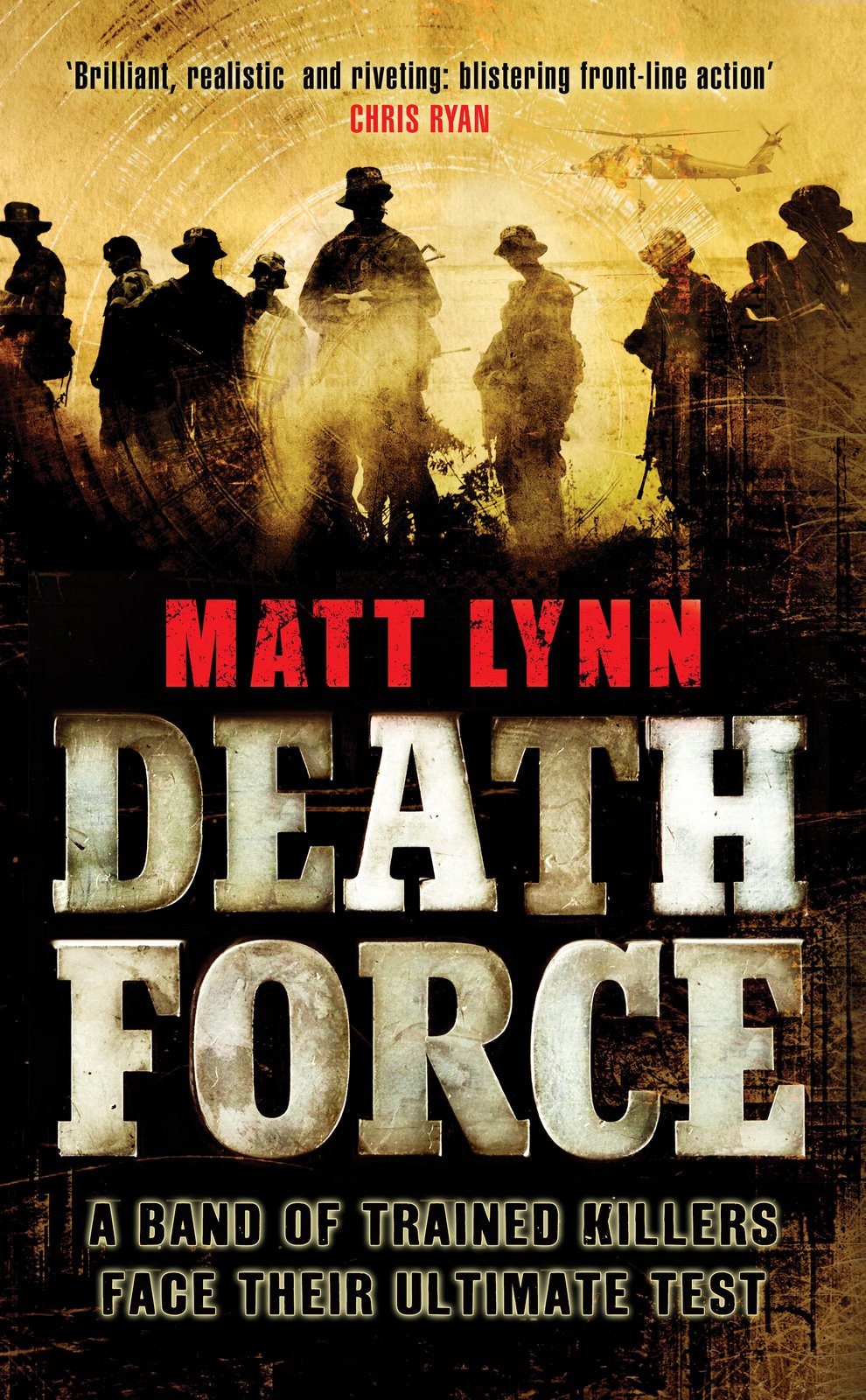
More Reviews for Death Force
Death Force has been pikcing up some more great reviews, which is very encouraging. In Australia, the Canberra Times described it as ‘blistering’ and ‘full to the brim with authentic military detail'. Over at the bookbag site, which is doing a great job of broadening out book reviewing, there is a great piece by Sue Magee. "From the gun fight on the road through to the reason for their being in Afghanistan the action never lets up for a moment. Lynn knows how to keep the pace going and there were occasions when I found I was holding my breath. Throw in all the boy's toys of weaponry that you could wish for and an almost impenetrable target and you have the stuff of which the big name movies are made." You can read the rest of it here.
Subscribe to:
Posts (Atom)




 Posts
Posts


