At the moment, I’m spending a lot of time setting up my new digital publishing venture, Endeavour Press. One of the things that interests me is, how many Kindles are out there. Amazon reported today that over the holiday weekend in the US it had sold four times as many Kindles as it did last year. But, rather irritatingly, it doesn’t actually say how many.
Figures are surprisingly hard to come by. For 2010, the estimates from the analysts are that five to eight million Kindles were sold. Let’s take a median figure, and called it 6.5 million. If Amazon has quadrupled those sales this time around – and based on anecdotal evidence, that sounds realistic – then it should sell around 26 million this year.
Add in the 2010 sales, and, after Xmas there could be 32 million Kindles out there globally. That’s about half the population of the UK. More significantly, I bet nearly all of those people are keener than average readers. After all, there isn’t much point in getting one if you only read on James Patterson book a year. You need to be a 5-10 books a year minimum reader to make the investment worthwhile.
So what proportion of heavy book readers will have a Kindle by 2012? I’d estimate about 40%. That’s what makes this market so fascinating.
Showing posts with label books. Show all posts
Showing posts with label books. Show all posts
Monday, 28 November 2011

Wednesday, 20 July 2011
Summer Reading
I'm off to Cornwall at the weekend with the kids, so I need to choose a few books for what I hope will be a relaxing week. I've already got a copy of Hunted by fellow Curzon-ite Emlyn Rees, The Big Short by Michael Lewis, who I know a bit from our work on Bloomberg, and American Pastoral by Philip Roth, who I have got back into since attending the Man Booker Prize dinner a few weeks ago in his honour. That seems like a pretty good range - some light fun, some art, and some serious stuff.
Hopefully a fair number of people will be taking 'Shadow Force' with them on holiday. I think of my own books as summer reading. But what makes a great story for the beach?
I think it needs a number of qualities. It needs a rattling good story that grips you from start to finish. It needs some jokes - no one wants to be too downbeat on holiday. It needs some escapism - a holiday is all about getting away from things, and we want a book that does that as well. But it also needs to tell you something serious, and educate you in some way, because a holiday is one of the few chances we have to fill gaps in our knowledge.
I try and touch all those bases in my own work. And I always keep in mind that that is the recipe for a great holiday read.
Hopefully a fair number of people will be taking 'Shadow Force' with them on holiday. I think of my own books as summer reading. But what makes a great story for the beach?
I think it needs a number of qualities. It needs a rattling good story that grips you from start to finish. It needs some jokes - no one wants to be too downbeat on holiday. It needs some escapism - a holiday is all about getting away from things, and we want a book that does that as well. But it also needs to tell you something serious, and educate you in some way, because a holiday is one of the few chances we have to fill gaps in our knowledge.
I try and touch all those bases in my own work. And I always keep in mind that that is the recipe for a great holiday read.
Tuesday, 5 July 2011
Launching Onto Kindle....
The Kindle is a fantastic device for readers, but it potentially is even more interesting for writers. It isn’t so much the ability to reach readers directly, as the opportunity it offers to try out new forms. The publishers and the bookshops are all focused on the 100,000 word book. But there are lots of other ways of writing things.
I’ve just launched by first short story on Kindle. It’s called ‘Lethal Force’. It would be free, but Amazon won’t let me give it away, so instead it is 71p. It will be free in iTunes just as soon as I can get Smashwords to give it an ISBN number and get it up. Take a look, you might enjoy it.
But it isn’t just short stories that can find a home on Kindle. There are other forms of writing as well.
I already have one idea, which I’m working on right now. Watch this space…..
I’ve just launched by first short story on Kindle. It’s called ‘Lethal Force’. It would be free, but Amazon won’t let me give it away, so instead it is 71p. It will be free in iTunes just as soon as I can get Smashwords to give it an ISBN number and get it up. Take a look, you might enjoy it.
But it isn’t just short stories that can find a home on Kindle. There are other forms of writing as well.
I already have one idea, which I’m working on right now. Watch this space…..
Tuesday, 18 May 2010
Bookseller Blog on the Supermarkets....
Are the sypermarkets bad for authors. In The Boookseller today, I'm explaining why not. You can read the piece here.
Wednesday, 5 May 2010
Are The Supermarkets Bad For Authors?
I heard recently that Tesco will be stocking ‘Fire Force’ when it comes out in paperback late this month. For a popular thriller author, that’s probably up there with winning the Booker prize. The supermarkets have become crucial to promoting and selling books.
That was confirmed today, with a story in The Bookseller about where people are buying books. They now account for 20% of adult book sales, compared with 9% two decades ago. The internet accounts for 19% compared with – fairly obviously – nothing back in 1989.
I expect to read lots of wailing from authors and the publishing industry about that. But I’m not so sure it is really such a bad thing.
Of course, it puts a huge amount of power in the hands of a relatively small number of big supermarket chains, and Tesco most of all. Publishers and authors have to work very hard to get the approval of the BMFC (the Big Man from Cheshunt).
But there are a couple of interesting points to make.
First, I’m sure the supermarkets are expanding the market. On the whole the supermarkets present books in an attractive way. The prices are great – less than £4 for a paperback, and you don’t have to buy two or three to get the lower price. They present books to tons of people who probably wouldn’t go anywhere near a bookshop. Overall, that must mean more books get sold.
Second, it’s not really the bookshops that are suffering. Their share is doing fine. The losers have been the old mail order book clubs and the stationary stores. They probably catered for the fairly general, casual reader anyway – the people who now buy their books in supermarkets. And they didn’t do such a great job anyway.
The book market is evolving into two audiences. The supermarkets for the mass market. And the bookshops and the internet for more committed readers.
There needn’t be anything for authors to worry about in that. They just have to make sure they find their own place in the market.
That was confirmed today, with a story in The Bookseller about where people are buying books. They now account for 20% of adult book sales, compared with 9% two decades ago. The internet accounts for 19% compared with – fairly obviously – nothing back in 1989.
I expect to read lots of wailing from authors and the publishing industry about that. But I’m not so sure it is really such a bad thing.
Of course, it puts a huge amount of power in the hands of a relatively small number of big supermarket chains, and Tesco most of all. Publishers and authors have to work very hard to get the approval of the BMFC (the Big Man from Cheshunt).
But there are a couple of interesting points to make.
First, I’m sure the supermarkets are expanding the market. On the whole the supermarkets present books in an attractive way. The prices are great – less than £4 for a paperback, and you don’t have to buy two or three to get the lower price. They present books to tons of people who probably wouldn’t go anywhere near a bookshop. Overall, that must mean more books get sold.
Second, it’s not really the bookshops that are suffering. Their share is doing fine. The losers have been the old mail order book clubs and the stationary stores. They probably catered for the fairly general, casual reader anyway – the people who now buy their books in supermarkets. And they didn’t do such a great job anyway.
The book market is evolving into two audiences. The supermarkets for the mass market. And the bookshops and the internet for more committed readers.
There needn’t be anything for authors to worry about in that. They just have to make sure they find their own place in the market.
Wednesday, 28 April 2010
Why Do Readers Read....
One of the interesting questions for any writer is why do readers read? There have been a couple of interesting articles recently about 'neuro- lit crit' (such as this one in the New York Times, or this one in The Guardian).
I won't try and get into the science of it too much, because clearly I'm not qualified to. And I'd probably get the wrong end of the stick anyway. But from the perspective of a writer, it's obviously helpful to understand why people like stories, and what triggers they pull in their brains.
Of the different theories, I was most impressed by the approach of the evolutionary biologists. They suggest we like certain types of stories because they help us think through survival strategies. So for example, the bulk of women's fiction is about finding a suitable mate (except with a few jokes thrown in).
And what about crime and thrillers? I'd suggest it's about identifying danger, and how you'd cope with it.
It's certainly a different way of thinking about story construction.
I won't try and get into the science of it too much, because clearly I'm not qualified to. And I'd probably get the wrong end of the stick anyway. But from the perspective of a writer, it's obviously helpful to understand why people like stories, and what triggers they pull in their brains.
Of the different theories, I was most impressed by the approach of the evolutionary biologists. They suggest we like certain types of stories because they help us think through survival strategies. So for example, the bulk of women's fiction is about finding a suitable mate (except with a few jokes thrown in).
And what about crime and thrillers? I'd suggest it's about identifying danger, and how you'd cope with it.
It's certainly a different way of thinking about story construction.
Tuesday, 2 February 2010
On Seeing My New Book For The First Time...

Headline sent through first copies of the hardback of 'Fire Force' last week, ahead of the publication of the book at the end of this week.
As you can see, it looks fantastic. The cover is slick and sharp, and not quite like anything else on the market.
Despite the inevitable trials and tribulations of this job, there is nothing quite like seeing your book in print for the first time. It is an incredible rush. I usually spend a fair few minutes just looking at the thing. After that, I usually put it down on a coffee table, and walk around it a bit, looking at it from different angles.
After that, I'll flick through it, and read a few favorite passages to myself. And then read a few at randon. And after that, I'll probably put it back on the table, and walk around it a bit more.
This can go on for days.
Ok, I'm nuts.
But, I suspect, most authors, if they are being honest, do something similar.
I don't imagine that thrill ever wears off. I hope not anyway.
Tuesday, 18 August 2009
The Curzon Group Red-Eye....
I've just got back from The Curzon Group's airport tour. You cna read about it in this blog I did for The Bookseller.
Tuesday, 11 August 2009
The Book Is Dead....
Over on The Curzon Group blog there's an interesting debate going on about the future of the book. I've chipped in my thoughts today, but its worth reading the whole thing.
Anyway, here's what I posted...
Clem and Tom both seem worried about the future of the book. But a blog is nothing without debate, and I'm not so sure. True, the Kindle and the new generation of e-books are potentially a threat, and one we should take seriously. And, also true, the music industry was effectively killed by the web, and the newspaper industry looks like being next, so we shouldn't be complacent.
Still, there are some important differences.
In both music and newspapers, the technology dictated the form. The 40-minute LP happened to be the length because that's what you could fit onto 12-inches of vinyl. The once a day mix of news, business, sport, crosswords and features that we call a newspaper came about because that was worked when printing presses and trains were the only way of distributing information. In both cases, the product itself was, to a large extent, created by the technology.
And so, when the technology changed, there wasn't much point to the product any more.
I don't that's true of the book. Okay, it's printed and bound, but it's just a narrated story and there have never been any technological rules about length (a novel, by the way, is a similar length to a dream) or format.
My point is that while digital music and digital news are in many ways superior products that isn't true of books.
A digital book might be cheaper, if the publishers choose to make it so, or free if there is file-sharing, but it isn't better.. And that's a crucial distinction.
To me the big challenge to writers and novelists isn't the e-book. It's the compter game. This is a completely new narrative form, and one that can be far more immmersive for the reader/player. But that isn't a threat. It's an opportunity.
Anyway, here's what I posted...
Clem and Tom both seem worried about the future of the book. But a blog is nothing without debate, and I'm not so sure. True, the Kindle and the new generation of e-books are potentially a threat, and one we should take seriously. And, also true, the music industry was effectively killed by the web, and the newspaper industry looks like being next, so we shouldn't be complacent.
Still, there are some important differences.
In both music and newspapers, the technology dictated the form. The 40-minute LP happened to be the length because that's what you could fit onto 12-inches of vinyl. The once a day mix of news, business, sport, crosswords and features that we call a newspaper came about because that was worked when printing presses and trains were the only way of distributing information. In both cases, the product itself was, to a large extent, created by the technology.
And so, when the technology changed, there wasn't much point to the product any more.
I don't that's true of the book. Okay, it's printed and bound, but it's just a narrated story and there have never been any technological rules about length (a novel, by the way, is a similar length to a dream) or format.
My point is that while digital music and digital news are in many ways superior products that isn't true of books.
A digital book might be cheaper, if the publishers choose to make it so, or free if there is file-sharing, but it isn't better.. And that's a crucial distinction.
To me the big challenge to writers and novelists isn't the e-book. It's the compter game. This is a completely new narrative form, and one that can be far more immmersive for the reader/player. But that isn't a threat. It's an opportunity.
Tuesday, 4 August 2009
The Supermarkets Take Over The Book Trade
Over on the Curzon Group blog, I've been disucussing whether the increasing power of the supermarkets in book retailing is good or bad for authors. Here's the post...
According to this report in The Bookseller, the supermarket chains now account for 20% of the UK book market. It has trebbled in the last five years, and the shares, not very surprisingly reflect the position of the chains - Tesco lead the way, with Asda and Sainsbury's huddling in second place.
It's traditional among authors to moan about the rising power of the supermarkets. But I'm not so sure. They may well be doing a lot of good.
I might be biased because my own book has been doing well at Asda - it has spent about six weeks now in their books chart.
But the supermarkets are doing two things that are really good.
One, they are making books really cheap. You'll pay less than £4 for a paperback in a supermarket, and that isn't just achieved by cutting the money going to publishers and authors (well, the author at least - they drive a hard bargain with the publisher). The supermarkets just don't need the same kind of margin that bookshops do - a 10p profit looks pretty good to Tesco, and is more than they make on a litre of milk, which weighs more, takes up more space and goes off after a couple of days as well. You don't need to know much economics to know that a cheaper a product gets, the more people buy it - and the more books get sold, the better for everyone.
Next, they introduce books to people in new settings. Most people go to the supermarket at least once a week. They can browse among the books, and occassionally find new things. We might like to imagine they'd spend an hour every week doing that at Waterstone's, but they truth is, they probably wouldn't.
For both reasons, the supermarkets are almost certainly increasing book sales in the UK.
Of course, there are some downsides.
They have a limited range, and they only stock a few books from the big publishers. The concentration of power is going to make it harder for new writers to break through.
And the publishers have become obsessed with them. When I was ghost-writing for Random House, all they cared about was 'what Tesco would think'. They even changed one writer's name becasue they didn't think Tesco would like what he was called. I thought they were being silly. Tesco would be happy with anything that sold, but they had become neutrotically obsessed with finding the perfect Tesco book.
But, that said, authors have to get out to where the books are. Personally, I'd love to be signing books and talking to customers and readers in Asda or Tesco. In fact, once we've got our aiport tour out of the way, I might make a 'supermarket tour' the Curzon Group project.
According to this report in The Bookseller, the supermarket chains now account for 20% of the UK book market. It has trebbled in the last five years, and the shares, not very surprisingly reflect the position of the chains - Tesco lead the way, with Asda and Sainsbury's huddling in second place.
It's traditional among authors to moan about the rising power of the supermarkets. But I'm not so sure. They may well be doing a lot of good.
I might be biased because my own book has been doing well at Asda - it has spent about six weeks now in their books chart.
But the supermarkets are doing two things that are really good.
One, they are making books really cheap. You'll pay less than £4 for a paperback in a supermarket, and that isn't just achieved by cutting the money going to publishers and authors (well, the author at least - they drive a hard bargain with the publisher). The supermarkets just don't need the same kind of margin that bookshops do - a 10p profit looks pretty good to Tesco, and is more than they make on a litre of milk, which weighs more, takes up more space and goes off after a couple of days as well. You don't need to know much economics to know that a cheaper a product gets, the more people buy it - and the more books get sold, the better for everyone.
Next, they introduce books to people in new settings. Most people go to the supermarket at least once a week. They can browse among the books, and occassionally find new things. We might like to imagine they'd spend an hour every week doing that at Waterstone's, but they truth is, they probably wouldn't.
For both reasons, the supermarkets are almost certainly increasing book sales in the UK.
Of course, there are some downsides.
They have a limited range, and they only stock a few books from the big publishers. The concentration of power is going to make it harder for new writers to break through.
And the publishers have become obsessed with them. When I was ghost-writing for Random House, all they cared about was 'what Tesco would think'. They even changed one writer's name becasue they didn't think Tesco would like what he was called. I thought they were being silly. Tesco would be happy with anything that sold, but they had become neutrotically obsessed with finding the perfect Tesco book.
But, that said, authors have to get out to where the books are. Personally, I'd love to be signing books and talking to customers and readers in Asda or Tesco. In fact, once we've got our aiport tour out of the way, I might make a 'supermarket tour' the Curzon Group project.
Friday, 24 April 2009
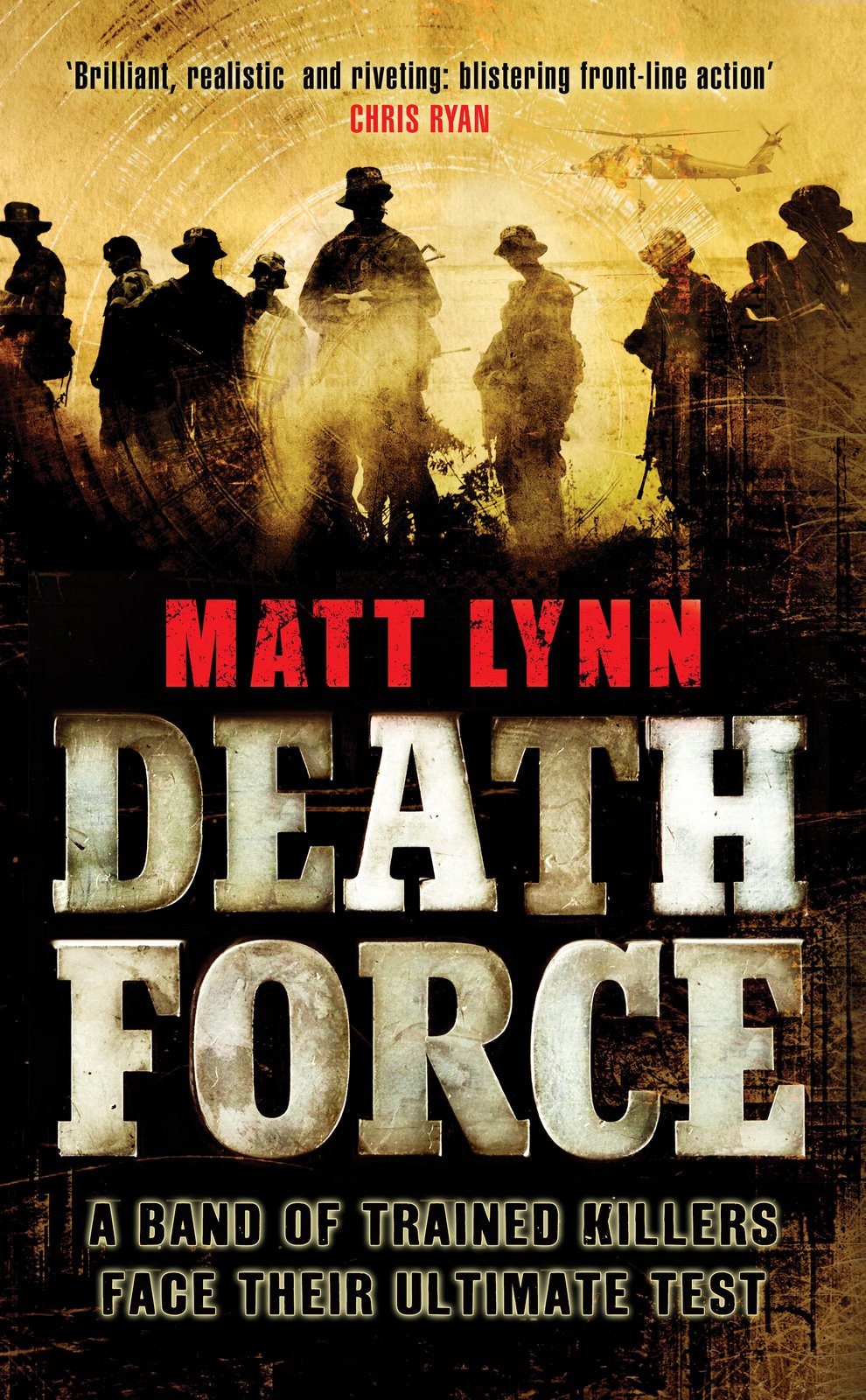
Death Force in Hammersmith
I'll be speaking about 'Death Force' at the books festival in Hammersmith next month. You can read about it here.
Thursday, 1 January 2009
International Thriller Writers
I just joined the International Thriller Writers association to start helping to promote 'Death Force', which is out in a couple of weeks time. It looks like a great organisation, even if it is quite US dominated. When I first started publishing as a novelist when 'Insecurity' came out in 1997 I joined the Crime Writers Association. But I found it very dominated by the crime writers and their audience. They are very different, in my judgement. I never read crime books, and the leading writers in the genre I have sampled - such as Ian Rankin - seem to me to be leaden and cliched. Surely the world doesn't need yet another dysfunctional middle-aged copper with a drink problem. The thriller and crime markets are completely seperate and it doesn't make any sense to try and lump them together.
Saturday, 31 May 2008
Faulks As Fleming
I've been reviewing Sebastian Faulk's James Bond book 'Devil May Care' for Bloomberg. The advance hype was very favorable, but I notice the later reviews are far harsher. Rightly so. Faulks really was an odd choice - why not one of the SAS ghost-writers, for example - for the job. I like his books, but I stopped reading them after 'On Green Dolphin Street', his attempt at a thriller, becasue he simply can't do excitement. I can't help feeling both Penguin and The Fleming estate missed a trick. They can't get all this publicity again. They could have re-launched the series with Bond set in the modern day, and with a writer who could both re-create the genre, and write a series of books. It's an expensive mistake.
Friday, 21 March 2008
The Web: Telecoms or Media?
I interviewed Clay Shirky this week for a new TV programme I am presenting for the Spectator. More on that later. Clay has a fascinating new book out on the impact of social media called 'Here Comes Everybody'. It's full of well-tuned insights into the web. One that struck me as telling was his point about use-generated content. Lots of people - particularly in the mainstream media - complain that the postings on blogs, the clips on YouTube, the homepages on MySpace etc are rubbish. And, of course they are, at least compared to professionally produced material. But Clay's point is that we should think of them more like phone calls than broadcasts. The fact that they are amateurish doesn't matter, becuase they are only intended for a few people anyway. There's a lot of truth in that. The point about the web is that it is really a development of the telephone. Once you take that on board, everything becomes a lot clearer.
Subscribe to:
Posts (Atom)




 Posts
Posts


