Over on the Curzon Group blog, I've kicked off a series about the annoying things people say to writers. But here it is....
Tom's splendid post yesterday about film rights has prompted me to think some more about the slim volume I'm planning to write one day called 'Annoying Things People Say To Writers'. One of the hazards of this job is that people have no idea how it really works, but of course they think they do.
The result? If you mention that you are a writer at a dinner party, they make really irritating remarks. Such as....
1. 'All you need to do now is sell the film rights'.
What am I meant to say to that? Oh, yeah, thanks, I'd never thought of that. But I'll get it sorted on Monday morning. Thanks for the idea.
2. 'I've been meaning to write a book when I get the time'.
Listen, if I meet a dentist, I don't say, 'Oh, I've been meaning to do some root canal work, I just never get a minute.' Or if I meet an airline pilot, I wouldn't say, 'Oh, I'll take an A330 for a spin when I've got a day off.' I recognise that those jobs require years of dedicatd training and practise. And yet everyone seems to think they could knock off a novel, easy-peasy, if only they could find a spare minute. It is more than a little rude to suggest that what we do is so simple anyone could do it in a few dull weekends.
3. 'Can I have the name of your agent'.
Why do people imagine we want to give out the contact details of our agents to everyone we meet? They can look it up for themselves. I've just given up on this one, and I now hand out my agent's details automatically to everyone I meet. At my wife's parents house in Cardiff a little while ago, I met this 90-year old lady who used to live next door to my wife when she was small. Turns out she's been working on a historical romantic epic of several hundred pages. I humbly gave her my agent's details. I bet he was pleased to get that one.
4. 'I looked in Smith's and they didn't have your book. I just thought you'd like to speak to your publisher about that.'
Listen, an author is psychologically incapable of walking past a bookshop without going inside to check if they have his book, and, if so, how many copies. Even Dan Brown does it - I've seen him, moving the display bin a bit further to the front of Waterstone's. Trust me, if they haven't got my book in stock, I already know -- all you are doing is rubbing it in.
This one will be continued next time someone says something really irritating to me -- which won't be long I'm sure
Showing posts with label curzon group. Show all posts
Showing posts with label curzon group. Show all posts
Tuesday, 10 November 2009

Tuesday, 6 October 2009
Are The Public Fed Up With Rubbish Yet
Maybe this is wishful thinking, but there are signs that the reading public may be getting fed up with some of the pap the publishers have been pushing at them in the last few years.
The Bookseller reports, via The Sun, that bookshops are a little reluctant to stock the new Katie Price book, her fourth in five years.
Even if you accept that Price is worth one memoir, maybe even two, four is probably pushing it a bit, even by the standards of Random House.
Meanwhile, I'm not sure the James Patterson word factory is quite the Toyota-style paragon of efficiency it should be either. Alex Cross's Trial drops back from 2 to 7 in the hardback charts this week, according to The Times.
Patterson has some talent, but by churning out formulaic, ghost-written thrillers he isn't doing anyone any favours. Least of all himself.
One of the purposes of The Curzon Group is to promote quality popular fiction - our own, obviously, but also other people's. It's encouraging to think that the reading public is fed up with cynical, ghost-written pap. We might even be on to something.
The Bookseller reports, via The Sun, that bookshops are a little reluctant to stock the new Katie Price book, her fourth in five years.
Even if you accept that Price is worth one memoir, maybe even two, four is probably pushing it a bit, even by the standards of Random House.
Meanwhile, I'm not sure the James Patterson word factory is quite the Toyota-style paragon of efficiency it should be either. Alex Cross's Trial drops back from 2 to 7 in the hardback charts this week, according to The Times.
Patterson has some talent, but by churning out formulaic, ghost-written thrillers he isn't doing anyone any favours. Least of all himself.
One of the purposes of The Curzon Group is to promote quality popular fiction - our own, obviously, but also other people's. It's encouraging to think that the reading public is fed up with cynical, ghost-written pap. We might even be on to something.
Tuesday, 15 September 2009
Dan Brown Day Arrives...
First, a confession. I really liked The Da Vinci Code. Admittedly, that was in part because I’ve always enjoyed the rich vein of nutty conspiracy theories that it drew upon, but I also though it was a brilliantly conceived and executed thriller. It took two of the strongest traditions of the genre – Sherlock Holmes style sleuthing, and cold-war conspiracies – and brilliantly updated them. It completely deserved all its success.
There’s only one problem with it – and one that is particularly pressing as the tsunami of hype and hoopla over Dan Brown’s follow-up, ‘The Lost Symbol’, threatens to wash away the rest of the publishing industry. Like many really successful books, while good in itself, its consequences haven’t always been quite so happy.
Publishers, inevitably, have been trying to cash in on the book’s popularity.
In the wake of The Da Vinci Code, the Vatican seems to have taken over from the KGB as the stock villain for thriller writers. Where once, every thriller had to have a tense scene with a rogue double-agent at Checkpoint Charlie, now it is just as mandatory to have a few missing pages from the Old Testament to chase, some wacky inscriptions from a church spire to decipher, and a few rogue monks quietly assassinating people.
It works for Dan Brown. But when most other writers try it, it looks a bit silly.
Worse, the publishers are now terrified that the Dan Brown juggernaut means they have to clear all other books from their schedules. But that is probably a mistake as well. After all, lots of people will be going into bookshops in the next couple of weeks to buy ‘The Lost Symbol’. They may well buy something else as well while they are there. So this month is probably a good one to sell a book that isn’t by dan Brown.
Which is why my fellow Curzon Group writer Richard Jay Parker and I put a short video up on You Tube about the Dan Brown craze. We wish the Dan-ster the best of luck with the new book – there are certainly a lot of expectations to live up to. But publishers and booksellers should remember there are a lot of other good books out there. And the last thing his fans are looking for are pale imitations and rip-offs.
There’s only one problem with it – and one that is particularly pressing as the tsunami of hype and hoopla over Dan Brown’s follow-up, ‘The Lost Symbol’, threatens to wash away the rest of the publishing industry. Like many really successful books, while good in itself, its consequences haven’t always been quite so happy.
Publishers, inevitably, have been trying to cash in on the book’s popularity.
In the wake of The Da Vinci Code, the Vatican seems to have taken over from the KGB as the stock villain for thriller writers. Where once, every thriller had to have a tense scene with a rogue double-agent at Checkpoint Charlie, now it is just as mandatory to have a few missing pages from the Old Testament to chase, some wacky inscriptions from a church spire to decipher, and a few rogue monks quietly assassinating people.
It works for Dan Brown. But when most other writers try it, it looks a bit silly.
Worse, the publishers are now terrified that the Dan Brown juggernaut means they have to clear all other books from their schedules. But that is probably a mistake as well. After all, lots of people will be going into bookshops in the next couple of weeks to buy ‘The Lost Symbol’. They may well buy something else as well while they are there. So this month is probably a good one to sell a book that isn’t by dan Brown.
Which is why my fellow Curzon Group writer Richard Jay Parker and I put a short video up on You Tube about the Dan Brown craze. We wish the Dan-ster the best of luck with the new book – there are certainly a lot of expectations to live up to. But publishers and booksellers should remember there are a lot of other good books out there. And the last thing his fans are looking for are pale imitations and rip-offs.
Monday, 14 September 2009
Fiction In A Recession
Over on the Curzon Group blog, I've been writing about how fiction changes in a recession.
There's some discussion out there about recession fiction, According to this piece in The Independent, publishers are demanding changes from their chick-lit authors to fit more straighten times. Meanwhile, the Daily Mail chips in with a peice about 'recession-lit'
Out go the sex-and-shopping bonkbusters, it seems. In come frugal tales of coping with the recession.
I wonder if the same trend applies to thrillers. Less obviously, in the sense that popular women's fiction is very materialistic. Thrillers don't have so much shopping in them anyway.
But in another sense, all popular fiction has to capture the mood. I suspect people are going to want more escapism, and more heroes who have fallen on hard times and want to make some quick money. I try to touch on some of those themes in my mercenary stories.
But I suspect it is a rich vein for thriller writers to mine. More financial thrillers, perhaps? More heist thrillers? And more mega-rich villains.
There's some discussion out there about recession fiction, According to this piece in The Independent, publishers are demanding changes from their chick-lit authors to fit more straighten times. Meanwhile, the Daily Mail chips in with a peice about 'recession-lit'
Out go the sex-and-shopping bonkbusters, it seems. In come frugal tales of coping with the recession.
I wonder if the same trend applies to thrillers. Less obviously, in the sense that popular women's fiction is very materialistic. Thrillers don't have so much shopping in them anyway.
But in another sense, all popular fiction has to capture the mood. I suspect people are going to want more escapism, and more heroes who have fallen on hard times and want to make some quick money. I try to touch on some of those themes in my mercenary stories.
But I suspect it is a rich vein for thriller writers to mine. More financial thrillers, perhaps? More heist thrillers? And more mega-rich villains.
Tuesday, 1 September 2009
Fed Up With Dan Brown? We Are....
The Curzon Group is already fed up withe the hype over the new Dan Brown book. So we made a video about it....
Wednesday, 26 August 2009
The Same But Different
Over on The Curzon Group blog I've been discussing the issues involved in writing a series of book. But you can read it here as well....
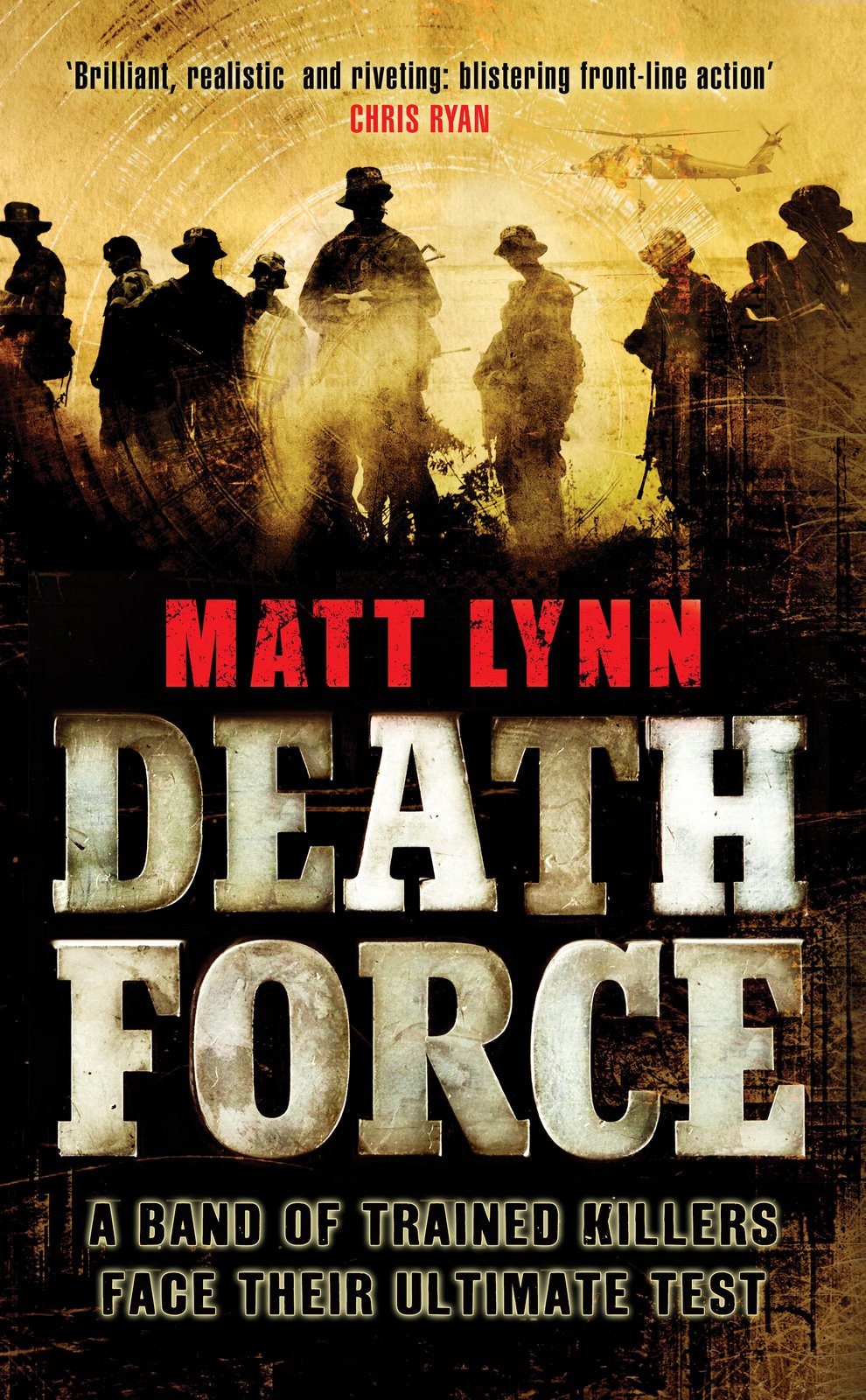
I was having lunch with my publisher, Martin Fletcher of Headline, last week. I was congratulating him on the cover of ‘Fire Force’, the sequel to ‘Death Force’, which will be out next year. It establishes a common identity with the first book, whilst being a great cover in itself. “The same, but different,” I observed.
It struck me that “the same but different” was a good way of describing how to approach writing a series of books. Increasingly, publishers want series because the characters can be established over time and the writer can build up an audience. But, of course, it poses challenges to the writer. You need to think about your characters and how they care going to develop over four or five books: in my case ten characters which is especially difficult. And then you need to keep the basic structure of the books similar, while also having sufficient variation to make them fresh and exciting.
There’s nothing wrong with “the same but different”. Mozart wrote 41 symphonies to which that description could be applied, but that doesn’t mean that most of them aren’t masterpieces. Of course you can take it too far (Take Van Morrison, for example. A genius, as well, but many of his albums could be described as ‘the same but, er, the same). The trick is to get the balance right.
I’ve just started work on ‘Shadow Force’, the third in the series. As you can see from the title, I’m keeping one word the same…while the other one is different.
I was having lunch with my publisher, Martin Fletcher of Headline, last week. I was congratulating him on the cover of ‘Fire Force’, the sequel to ‘Death Force’, which will be out next year. It establishes a common identity with the first book, whilst being a great cover in itself. “The same, but different,” I observed.
It struck me that “the same but different” was a good way of describing how to approach writing a series of books. Increasingly, publishers want series because the characters can be established over time and the writer can build up an audience. But, of course, it poses challenges to the writer. You need to think about your characters and how they care going to develop over four or five books: in my case ten characters which is especially difficult. And then you need to keep the basic structure of the books similar, while also having sufficient variation to make them fresh and exciting.
There’s nothing wrong with “the same but different”. Mozart wrote 41 symphonies to which that description could be applied, but that doesn’t mean that most of them aren’t masterpieces. Of course you can take it too far (Take Van Morrison, for example. A genius, as well, but many of his albums could be described as ‘the same but, er, the same). The trick is to get the balance right.
I’ve just started work on ‘Shadow Force’, the third in the series. As you can see from the title, I’m keeping one word the same…while the other one is different.
Tuesday, 18 August 2009
The Curzon Group Red-Eye....
I've just got back from The Curzon Group's airport tour. You cna read about it in this blog I did for The Bookseller.
Tuesday, 11 August 2009
The Book Is Dead....
Over on The Curzon Group blog there's an interesting debate going on about the future of the book. I've chipped in my thoughts today, but its worth reading the whole thing.
Anyway, here's what I posted...
Clem and Tom both seem worried about the future of the book. But a blog is nothing without debate, and I'm not so sure. True, the Kindle and the new generation of e-books are potentially a threat, and one we should take seriously. And, also true, the music industry was effectively killed by the web, and the newspaper industry looks like being next, so we shouldn't be complacent.
Still, there are some important differences.
In both music and newspapers, the technology dictated the form. The 40-minute LP happened to be the length because that's what you could fit onto 12-inches of vinyl. The once a day mix of news, business, sport, crosswords and features that we call a newspaper came about because that was worked when printing presses and trains were the only way of distributing information. In both cases, the product itself was, to a large extent, created by the technology.
And so, when the technology changed, there wasn't much point to the product any more.
I don't that's true of the book. Okay, it's printed and bound, but it's just a narrated story and there have never been any technological rules about length (a novel, by the way, is a similar length to a dream) or format.
My point is that while digital music and digital news are in many ways superior products that isn't true of books.
A digital book might be cheaper, if the publishers choose to make it so, or free if there is file-sharing, but it isn't better.. And that's a crucial distinction.
To me the big challenge to writers and novelists isn't the e-book. It's the compter game. This is a completely new narrative form, and one that can be far more immmersive for the reader/player. But that isn't a threat. It's an opportunity.
Anyway, here's what I posted...
Clem and Tom both seem worried about the future of the book. But a blog is nothing without debate, and I'm not so sure. True, the Kindle and the new generation of e-books are potentially a threat, and one we should take seriously. And, also true, the music industry was effectively killed by the web, and the newspaper industry looks like being next, so we shouldn't be complacent.
Still, there are some important differences.
In both music and newspapers, the technology dictated the form. The 40-minute LP happened to be the length because that's what you could fit onto 12-inches of vinyl. The once a day mix of news, business, sport, crosswords and features that we call a newspaper came about because that was worked when printing presses and trains were the only way of distributing information. In both cases, the product itself was, to a large extent, created by the technology.
And so, when the technology changed, there wasn't much point to the product any more.
I don't that's true of the book. Okay, it's printed and bound, but it's just a narrated story and there have never been any technological rules about length (a novel, by the way, is a similar length to a dream) or format.
My point is that while digital music and digital news are in many ways superior products that isn't true of books.
A digital book might be cheaper, if the publishers choose to make it so, or free if there is file-sharing, but it isn't better.. And that's a crucial distinction.
To me the big challenge to writers and novelists isn't the e-book. It's the compter game. This is a completely new narrative form, and one that can be far more immmersive for the reader/player. But that isn't a threat. It's an opportunity.
Tuesday, 4 August 2009
The Supermarkets Take Over The Book Trade
Over on the Curzon Group blog, I've been disucussing whether the increasing power of the supermarkets in book retailing is good or bad for authors. Here's the post...
According to this report in The Bookseller, the supermarket chains now account for 20% of the UK book market. It has trebbled in the last five years, and the shares, not very surprisingly reflect the position of the chains - Tesco lead the way, with Asda and Sainsbury's huddling in second place.
It's traditional among authors to moan about the rising power of the supermarkets. But I'm not so sure. They may well be doing a lot of good.
I might be biased because my own book has been doing well at Asda - it has spent about six weeks now in their books chart.
But the supermarkets are doing two things that are really good.
One, they are making books really cheap. You'll pay less than £4 for a paperback in a supermarket, and that isn't just achieved by cutting the money going to publishers and authors (well, the author at least - they drive a hard bargain with the publisher). The supermarkets just don't need the same kind of margin that bookshops do - a 10p profit looks pretty good to Tesco, and is more than they make on a litre of milk, which weighs more, takes up more space and goes off after a couple of days as well. You don't need to know much economics to know that a cheaper a product gets, the more people buy it - and the more books get sold, the better for everyone.
Next, they introduce books to people in new settings. Most people go to the supermarket at least once a week. They can browse among the books, and occassionally find new things. We might like to imagine they'd spend an hour every week doing that at Waterstone's, but they truth is, they probably wouldn't.
For both reasons, the supermarkets are almost certainly increasing book sales in the UK.
Of course, there are some downsides.
They have a limited range, and they only stock a few books from the big publishers. The concentration of power is going to make it harder for new writers to break through.
And the publishers have become obsessed with them. When I was ghost-writing for Random House, all they cared about was 'what Tesco would think'. They even changed one writer's name becasue they didn't think Tesco would like what he was called. I thought they were being silly. Tesco would be happy with anything that sold, but they had become neutrotically obsessed with finding the perfect Tesco book.
But, that said, authors have to get out to where the books are. Personally, I'd love to be signing books and talking to customers and readers in Asda or Tesco. In fact, once we've got our aiport tour out of the way, I might make a 'supermarket tour' the Curzon Group project.
According to this report in The Bookseller, the supermarket chains now account for 20% of the UK book market. It has trebbled in the last five years, and the shares, not very surprisingly reflect the position of the chains - Tesco lead the way, with Asda and Sainsbury's huddling in second place.
It's traditional among authors to moan about the rising power of the supermarkets. But I'm not so sure. They may well be doing a lot of good.
I might be biased because my own book has been doing well at Asda - it has spent about six weeks now in their books chart.
But the supermarkets are doing two things that are really good.
One, they are making books really cheap. You'll pay less than £4 for a paperback in a supermarket, and that isn't just achieved by cutting the money going to publishers and authors (well, the author at least - they drive a hard bargain with the publisher). The supermarkets just don't need the same kind of margin that bookshops do - a 10p profit looks pretty good to Tesco, and is more than they make on a litre of milk, which weighs more, takes up more space and goes off after a couple of days as well. You don't need to know much economics to know that a cheaper a product gets, the more people buy it - and the more books get sold, the better for everyone.
Next, they introduce books to people in new settings. Most people go to the supermarket at least once a week. They can browse among the books, and occassionally find new things. We might like to imagine they'd spend an hour every week doing that at Waterstone's, but they truth is, they probably wouldn't.
For both reasons, the supermarkets are almost certainly increasing book sales in the UK.
Of course, there are some downsides.
They have a limited range, and they only stock a few books from the big publishers. The concentration of power is going to make it harder for new writers to break through.
And the publishers have become obsessed with them. When I was ghost-writing for Random House, all they cared about was 'what Tesco would think'. They even changed one writer's name becasue they didn't think Tesco would like what he was called. I thought they were being silly. Tesco would be happy with anything that sold, but they had become neutrotically obsessed with finding the perfect Tesco book.
But, that said, authors have to get out to where the books are. Personally, I'd love to be signing books and talking to customers and readers in Asda or Tesco. In fact, once we've got our aiport tour out of the way, I might make a 'supermarket tour' the Curzon Group project.
Tuesday, 7 July 2009
What Makes A Great Airport Thriller....
Over on The Curzon Group page, we're starting a writers's group blog, loosely modelled on the Kill Zone blog in the US. Tom Cain did a great post yesterday, and today I have done a post on what makes a great airport thriller. I'll reproduce it here, but there is more great stuff on the Curzon page....
The Curzon Group is preparing to embark on what The Bookseller described as the first ever airport tour by a group of authors.
The logic behind it, as I explained to The Bookseller, is pretty obvious. We write what are usually called ‘airport thrillers’. So what better place to sell them than an airport?
But that also set me thinking? What exactly is an ‘airport thriller’?
It’s partly the market. It means a book aimed at people who do a lot of their reading on the beach, or else on business trips. They probably aren’t heavy or devoted readers. They don’t spend hours and hours browsing in a big Waterstone’s. They pick up a couple of books at the airport before they leave the country.
But it is also, and probably more importantly for a writer, a style of book.
To me, a classic airport thriller has to be engrossing enough to make time melt away.
Most of don’t enjoy flying that much – and, as it happens, I really don’t like it at all. It’s dull, and often stressful. So you need something to take that will totally draw you in, getting you involved enough in the story that you’ve collected your bags from the carousel before you realise it.
That means the plot has to be brutal in its grip, and the writing fast enough to leave your breathless.
There is also, I suspect, something exotic and escapist about a great airport thriller.
Air travel doesn’t have much glamour left to it. The idea of the ‘jet set’ has been killed off by Ryanair and Easyjet. But an airport thriller is still a book we read when we’re travelling on business or on holiday, and that is a fun, exciting thing to be doing. We want the book we’re reading to have a bit of glamour as well: some exotic locations, some sex, some wit and panache. It needs to have something of the flavour of a good holiday itself: exciting, memorable, escapist, and most of all great fun.
I wonder what are the ten best airport thrillers of all time?
Funnily enough I’m about to head off to Portugal for two weeks on holiday (and no doubt collecting a couple of airport thrillers at Gatwick on the way).
I’ll try and put together a list of my top ten for the next post? But any suggestions?
The Curzon Group is preparing to embark on what The Bookseller described as the first ever airport tour by a group of authors.
The logic behind it, as I explained to The Bookseller, is pretty obvious. We write what are usually called ‘airport thrillers’. So what better place to sell them than an airport?
But that also set me thinking? What exactly is an ‘airport thriller’?
It’s partly the market. It means a book aimed at people who do a lot of their reading on the beach, or else on business trips. They probably aren’t heavy or devoted readers. They don’t spend hours and hours browsing in a big Waterstone’s. They pick up a couple of books at the airport before they leave the country.
But it is also, and probably more importantly for a writer, a style of book.
To me, a classic airport thriller has to be engrossing enough to make time melt away.
Most of don’t enjoy flying that much – and, as it happens, I really don’t like it at all. It’s dull, and often stressful. So you need something to take that will totally draw you in, getting you involved enough in the story that you’ve collected your bags from the carousel before you realise it.
That means the plot has to be brutal in its grip, and the writing fast enough to leave your breathless.
There is also, I suspect, something exotic and escapist about a great airport thriller.
Air travel doesn’t have much glamour left to it. The idea of the ‘jet set’ has been killed off by Ryanair and Easyjet. But an airport thriller is still a book we read when we’re travelling on business or on holiday, and that is a fun, exciting thing to be doing. We want the book we’re reading to have a bit of glamour as well: some exotic locations, some sex, some wit and panache. It needs to have something of the flavour of a good holiday itself: exciting, memorable, escapist, and most of all great fun.
I wonder what are the ten best airport thrillers of all time?
Funnily enough I’m about to head off to Portugal for two weeks on holiday (and no doubt collecting a couple of airport thrillers at Gatwick on the way).
I’ll try and put together a list of my top ten for the next post? But any suggestions?
Thursday, 25 June 2009
The Airport Tour
The Curzon Group has been plotting an airport tour to promote our books. You can read all about it in The Bookseller today. It should be fun. Writers don't usually go to airport bookshops and that's where people buy thrillers.
Monday, 1 June 2009
Reading in Hammersmith
.jpg)

Martin Baker and I tried out the first Curzon Group public reading in Hammersmith last week. It went pretty well - and Debby Wale who organised it has very kindly sent us some pictures taken by Adrian Lewis.
Monday, 20 April 2009
The Curzon Group
The Curzon Group, which I've been putting together with Martin Baker and Alan Clements, is launched.
We had some great write-ups in The Bookseller and The Guardian. Hopefully more will follow.
We had some great write-ups in The Bookseller and The Guardian. Hopefully more will follow.
Subscribe to:
Posts (Atom)




 Posts
Posts


