One of my favourite records of all time is the Johnny Cash ‘Live At San Quentin’ album: a set that captures the rugged, outlaw sound of the man to perfection. So I couldn’t help thinking about that as I did my first prison gig a couple of weeks ago.
I wasn’t actually in San Quentin. I was at Goudhurst Prison, which is my local jail down here in Kent. It’s actually set among idyllic English countryside, and is in a pleasant enough old building, but the fact it has barbed wire all around it, and you have to hand in your mobile and show your passport at the door to get in, reminds you that this is indeed a jail.
I resisted the temptation to bounce onto stage saying, “Hello, my name is Matt Lynn’ before kicking into the opening chords of ‘Wanted Man’.
Instead, I just gave a version of my standard library talk, where I chat for a while about where the ideas for the ‘Death Force’ series of books came about, how they get written, how publishing works, and all the usual things that people like authors to talk about.
It was a different audience, however. They were younger, and, of course, all men. Quite a few of them had read the books, and enjoyed them which was gratifying, and the library service had bought some books to give away as a competition prize, which made a nice end to the event. They were more interested in money and contracts than most audiences, and maybe that says something about the kind of people they are.
I was struck by how intelligent most of the men were, and how articulate. Obviously something had gone wrong with their lives to end up in prison, but they were men with a lot of potential.
I came away, as one does from these kind of experiences, thinking about how narrow the line is between the safe, comfortable, easy lives that most of us lead, and the far darker, more troubled routes that some people take.
Showing posts with label thrillers. death force. Show all posts
Showing posts with label thrillers. death force. Show all posts
Saturday, 2 April 2011

Tuesday, 30 November 2010
Cyprus Well Profile
There is an interview with me today on the Cyprus Well website. You can read it here.
Thursday, 28 October 2010
An Interview with the Northern Echo.
There's a great interview with me about the Death Force series in the Northern Echo. You can read it here.
Tuesday, 28 September 2010
Putting Voices To Characters:
I got a call out of the blue the other day from an actor called Paul Panting. He was about to start recording an audio version of Fire Force, and he wanted to have a chat about accents, as well as checking the pronunciation of some of the military hardware.
As anyone who has read either ‘Death Force’ or ‘Fire Force’ will know, there is a big group of character in the stories, and they all come from quite different places. Steve is South London, working class. Ollie is a public schoolboy. Dan is an Australian, Maksim a Russian, Chris a South African, and so on.
We were discussing what kind of voices to give the different men, and how far too push it. In the books, I don’t really give them different accents all the time, in the sense that, Chris, for example doesn’t talk about ‘Seth Eefrica’. That’s partly because I’m not very good at writing accents, but also because it could turn into an accent fest, and get very silly and distracting. I prefer to let their characters comes through by the type of things they say, and how they react to situations, rather than by giving them funny voices.
Paul and I agreed that that was the way to do it in the audio version as well – even if it meant he didn’t get a chance to show off all those accents he learned in acting school.
But it also struck me that just hearing the audio book – which I’m really looking forward to – is going to change my perception of the characters. I already hear Steve and Ollie’s voice in my head when I’m writing them, but of course an actor’s interpretation will be slightly different to mine. It will be fascinating, but also a bit strange to hear a different take on all the guys in the unit. It may even change the way I think about them.
As anyone who has read either ‘Death Force’ or ‘Fire Force’ will know, there is a big group of character in the stories, and they all come from quite different places. Steve is South London, working class. Ollie is a public schoolboy. Dan is an Australian, Maksim a Russian, Chris a South African, and so on.
We were discussing what kind of voices to give the different men, and how far too push it. In the books, I don’t really give them different accents all the time, in the sense that, Chris, for example doesn’t talk about ‘Seth Eefrica’. That’s partly because I’m not very good at writing accents, but also because it could turn into an accent fest, and get very silly and distracting. I prefer to let their characters comes through by the type of things they say, and how they react to situations, rather than by giving them funny voices.
Paul and I agreed that that was the way to do it in the audio version as well – even if it meant he didn’t get a chance to show off all those accents he learned in acting school.
But it also struck me that just hearing the audio book – which I’m really looking forward to – is going to change my perception of the characters. I already hear Steve and Ollie’s voice in my head when I’m writing them, but of course an actor’s interpretation will be slightly different to mine. It will be fascinating, but also a bit strange to hear a different take on all the guys in the unit. It may even change the way I think about them.
Tuesday, 14 September 2010
Thriller Writers Need More Relevance
One of my favourite themes is how thriller writers aren’t keeping up with the times. Britain and the US have been involved in two major and very nasty wars in the last decade, both in Iraq and Afghanistan. But you wouldn’t guess it from reading the thrillers on the shelves at your local WH Smith. The y are all old-style Cold War spy thrillers, stuff about hidden scrolls, serial killers, or lawyers. There is almost nothing about the wars we are fighting now.
There is a fascinating piece related to that in the New York Times. It points out that the most vibrant story-telling about contemporary warfare is in the video game industry, not in the thriller industry. Games like Medal of Honour and Call of Duty are far more relevant to what is happening in the world today than just about any book.
I’m trying to address that with my ‘Death Force’ series, which are bang up to date. But not enough writers are taking up that challenge. I suspect that is partly the fault of the publishers, who should be looking for more contemporary material. But it also because writers have lost the desire to be relevant.
The video game already poses a big challenge for writers. In many ways it is a more interesting narrative form. But surely it is silly to leave the field completely top gaming, rather than the novel
There is a fascinating piece related to that in the New York Times. It points out that the most vibrant story-telling about contemporary warfare is in the video game industry, not in the thriller industry. Games like Medal of Honour and Call of Duty are far more relevant to what is happening in the world today than just about any book.
I’m trying to address that with my ‘Death Force’ series, which are bang up to date. But not enough writers are taking up that challenge. I suspect that is partly the fault of the publishers, who should be looking for more contemporary material. But it also because writers have lost the desire to be relevant.
The video game already poses a big challenge for writers. In many ways it is a more interesting narrative form. But surely it is silly to leave the field completely top gaming, rather than the novel
Saturday, 24 July 2010
Dubai As Thriller Central...
In the Telegraph today, I've been explaining why Dubai is thriller-central, a natural place for anyone writing about spies and mercenaries to set a story. And there is, of course, a scene there right at the start if 'Death Force'. You can read the piece here
Tuesday, 25 May 2010
The Return of the Wartime Thriller...
I've just returned from CrimeFest in Bristol. While I was there, I gave a talk on the return of the wartime thriller, which attracted a fair bit of discussion. Still, some of the six billion or so people who didn't make it to the talk might well be interested as well, so here are the notes I spoke from.
"When I staretd work on the Death Force series, it seemed to me that a military thriller was precisely the right kind of book to be writing at the moment.
After all, Britain has been involved in two long and fairly nasty military campaigns, one in Iraq, and one in Afghanistan.
The last decade has seen more sustained combat operation by the British army than any decade since the 1950s when the British Army was fighting in Korea.
But, so far there hasn’t been very much fiction about it.
There have been plenty of non-fiction books such as ‘Sniper One’ or ‘Eight Lives Down’ and some of them have been really good.
So far, however, thriller writers haven’t been tackling those wars directly.
They’ve been stuck in still writing the kind of spy and espionage thrillers that were popular in the Cold War.
Or else they’ve been writing crime thrillers, usually featuring ever more gruesome serial killers.
But they haven’t, on the whole, been writing about the wars we are fighting right now.
Which is pretty odd.
Because popular fiction is one of the ways we discuss and debate things that are happening in the world around us.
And thrillers have always been a genre that draws on and reflect the world around us.
The more I thought about it, the more it seemed to me that the world was ready for the return of the military thriller.
After all, if you go back to the origins of the genre, it was often bound up with military matters.
Think, for example, about a book such ‘The Thirty-Nine Steps’, which many people would quite rightly regard as one of the foundations of the whole thriller genre. Richard Hannay, its hero, isn’t a solider. But it’s a First World War novel, as indeed are the subsequent Hannay stories Buchan wrote. They are bound up with the wars that Britain was fighting at the time the stories were written.
If you fast forward, the work of a writer such as Eric Ambler, who many people quite rightly regard as one of the first literary thriller writers, is bound up with Word War Two. A book such as ‘Journey Into Fear’ is a wartime thriller that capture brilliantly the strange half-war, half-peace atmosphere of early 1940s, and probably tells you more about how people felt about the war at that stage than any history book.
In the wake of World War Two, the military thriller really came into its own. Look for example at the work of Alistair MacLean, one of my favourite thriller writers of all time. Books such The Guns of Navaronne and HMS Ulysses are classics of the genre.
Hammond Innnes started out as military thriller writer, based mainly on his experiences in the Royal Artillery.
And Dennis Wheatley, probably mostly remembered now for his occult novels, also wrote a series of World War Two thrillers.
In fact, when I started reading books, around the early 1970s, the World War Two thriller genre was one of the most popular. There was an endless series of them to choose from in the bookshops or in the libraries.
Then, I think, from the 1970s onwards it went into decline.
There were still military thrillers around. But it became an historical genre – think, for example, about the Flashman books, or Bernard Cornwall’s Sharpe series.
There was a reason for that, I think.
As I said earlier, the thriller genre reflects the world around it.
And for most of fifty years after World War Two, we didn’t fight any proper wars. We just had the Cold War. And, of course, in the Cold War all the actual fighting was done by the spies and secret agents. The actual soldiers – thankfully - stayed in their barracks.
Thriller writers latched onto that. From Ian Fleming to Len Deighton to John Le Carre there were countless spy thrillers. Indeed, there were so many of them, and that kind of warfare went on for so long, that we tended to think that the thriller genre and the spy story were virtually the same thing.
But, of course, that wasn’t true. It was just that thriller writers were reflecting the war we were fighting then.
Now, of course, that has changed.
One thing that’s happened to the world since the end of the Cold War is that we are fighting lots of small, hot wars, rather than one big cold one. Bosnia, Sierra Leone, Iraq and Afghanistan…and no doubt there will be more.
And in these wars, the fighting is done by soldiers, not spies.
So, in fact, this is precisely the right time to be writing a military thriller.
It’s already been happening to some degree.
Ask yourself this question. Who are the most successful British thriller writers of the last decade?
Well, Lee Child most obviously.
But also Andy McNab and Chris Ryan.
I may know a bit more about those books than I really should. But they are both writing great books which are firmly in the tradition of action, adventure thrillers.
I think Alistair MacLean could pick up any book by either writer, and feel instantly at home with them.
But, surprisingly, not many other British thriller writers have been tackling those wars directly.
How many thrillers have been set in Helmand, for example?
In fact, the thriller genre is too stuck in the spy story.
The real conflict in the world right now is military. That’s where the drama and the conflict and the stories are.
And that’s what thriller writers who are interested in the world around them should be writing about."
"When I staretd work on the Death Force series, it seemed to me that a military thriller was precisely the right kind of book to be writing at the moment.
After all, Britain has been involved in two long and fairly nasty military campaigns, one in Iraq, and one in Afghanistan.
The last decade has seen more sustained combat operation by the British army than any decade since the 1950s when the British Army was fighting in Korea.
But, so far there hasn’t been very much fiction about it.
There have been plenty of non-fiction books such as ‘Sniper One’ or ‘Eight Lives Down’ and some of them have been really good.
So far, however, thriller writers haven’t been tackling those wars directly.
They’ve been stuck in still writing the kind of spy and espionage thrillers that were popular in the Cold War.
Or else they’ve been writing crime thrillers, usually featuring ever more gruesome serial killers.
But they haven’t, on the whole, been writing about the wars we are fighting right now.
Which is pretty odd.
Because popular fiction is one of the ways we discuss and debate things that are happening in the world around us.
And thrillers have always been a genre that draws on and reflect the world around us.
The more I thought about it, the more it seemed to me that the world was ready for the return of the military thriller.
After all, if you go back to the origins of the genre, it was often bound up with military matters.
Think, for example, about a book such ‘The Thirty-Nine Steps’, which many people would quite rightly regard as one of the foundations of the whole thriller genre. Richard Hannay, its hero, isn’t a solider. But it’s a First World War novel, as indeed are the subsequent Hannay stories Buchan wrote. They are bound up with the wars that Britain was fighting at the time the stories were written.
If you fast forward, the work of a writer such as Eric Ambler, who many people quite rightly regard as one of the first literary thriller writers, is bound up with Word War Two. A book such as ‘Journey Into Fear’ is a wartime thriller that capture brilliantly the strange half-war, half-peace atmosphere of early 1940s, and probably tells you more about how people felt about the war at that stage than any history book.
In the wake of World War Two, the military thriller really came into its own. Look for example at the work of Alistair MacLean, one of my favourite thriller writers of all time. Books such The Guns of Navaronne and HMS Ulysses are classics of the genre.
Hammond Innnes started out as military thriller writer, based mainly on his experiences in the Royal Artillery.
And Dennis Wheatley, probably mostly remembered now for his occult novels, also wrote a series of World War Two thrillers.
In fact, when I started reading books, around the early 1970s, the World War Two thriller genre was one of the most popular. There was an endless series of them to choose from in the bookshops or in the libraries.
Then, I think, from the 1970s onwards it went into decline.
There were still military thrillers around. But it became an historical genre – think, for example, about the Flashman books, or Bernard Cornwall’s Sharpe series.
There was a reason for that, I think.
As I said earlier, the thriller genre reflects the world around it.
And for most of fifty years after World War Two, we didn’t fight any proper wars. We just had the Cold War. And, of course, in the Cold War all the actual fighting was done by the spies and secret agents. The actual soldiers – thankfully - stayed in their barracks.
Thriller writers latched onto that. From Ian Fleming to Len Deighton to John Le Carre there were countless spy thrillers. Indeed, there were so many of them, and that kind of warfare went on for so long, that we tended to think that the thriller genre and the spy story were virtually the same thing.
But, of course, that wasn’t true. It was just that thriller writers were reflecting the war we were fighting then.
Now, of course, that has changed.
One thing that’s happened to the world since the end of the Cold War is that we are fighting lots of small, hot wars, rather than one big cold one. Bosnia, Sierra Leone, Iraq and Afghanistan…and no doubt there will be more.
And in these wars, the fighting is done by soldiers, not spies.
So, in fact, this is precisely the right time to be writing a military thriller.
It’s already been happening to some degree.
Ask yourself this question. Who are the most successful British thriller writers of the last decade?
Well, Lee Child most obviously.
But also Andy McNab and Chris Ryan.
I may know a bit more about those books than I really should. But they are both writing great books which are firmly in the tradition of action, adventure thrillers.
I think Alistair MacLean could pick up any book by either writer, and feel instantly at home with them.
But, surprisingly, not many other British thriller writers have been tackling those wars directly.
How many thrillers have been set in Helmand, for example?
In fact, the thriller genre is too stuck in the spy story.
The real conflict in the world right now is military. That’s where the drama and the conflict and the stories are.
And that’s what thriller writers who are interested in the world around them should be writing about."
Thursday, 25 March 2010
Writing A Short Story
I’ve just been writing a short story for the Red Bull magazine that goes out with The Independent. Funnily enough, despite having written quite a few novels, both under my own name, and under other people’s, I found it really difficult to get started.
A lot of people graduate from short stories to novels, but it is quite hard to go the other way. I’m used to the flow of a novel. I have the structure pretty much hard-wired into my brain. I know when to speed up, slow down, how to develop the characters, and so on.
But a short story is 2,000 words. It’s hardly any space at all to get a story started, never mind finish the whole thing. It’s more like an anecdote than an adventure.
Anyway, in the end I think I did ok.
But it was a very steep learning curve.
A lot of people graduate from short stories to novels, but it is quite hard to go the other way. I’m used to the flow of a novel. I have the structure pretty much hard-wired into my brain. I know when to speed up, slow down, how to develop the characters, and so on.
But a short story is 2,000 words. It’s hardly any space at all to get a story started, never mind finish the whole thing. It’s more like an anecdote than an adventure.
Anyway, in the end I think I did ok.
But it was a very steep learning curve.
Wednesday, 17 March 2010
My Finances...
In the rather unlikely event that anyone is very interested, The Independent has been giving me advice on my finances. Good picture of Death Force, though. You can read the piece here.
Tuesday, 2 February 2010
Newcastle Talk
I'll be up in Newcastle next week, talking about 'Death Force' and 'Fire Force'. Details here.
Thursday, 17 December 2009
A Book A Year....
The end of the year is fast approaching, and I've just realised that I won't have finished a book this year. Not quite anyway. I'm on page 470 of 'Shadow Force', and I reckon it will be about 600 pages on Microsoft Word (double-spaced), so unless I skip Christmas completely it won't be done before the 31st. And that's just the first draft. There are still revisions to be made. And facts to be checked.
That doesn't matter greatly in itself. The book isn't due to be handed in until March, so there is plenty of time.
But one of the things I've discovered from visiting bookshops in support of 'Death Force' this year is that writers need to crack out a book a year to establish themselves in the market. Several booksellers have mentioned that a writer gets going, then a year goes by without a book appearing, and they lose momentum. Indeed, one of the reasons I think Headline liked the idea of taking me on as an author is because they knew from the ghost-writing I'd done that I could be relied upon to deliver a book once every twelve months.
I can see why it's important. Readers need to be seeing you regularly in the shops before they will sample you. Publishers need to feel they will have a supply of fresh product to make it worth promoting you. But I can't help feeling it will get harder as I go on. When you start, you just have the manuscript to worry about. As you progress, however, there is more and more promotional work to take care off. And whilst that's important as well, at a certain point it is going to make the book a year cycle harder to keep up with.
So I guess my New Year's Resolation will be to make sure I start work early on the next book in the series - so that I get it finished by the end of 2010.
That doesn't matter greatly in itself. The book isn't due to be handed in until March, so there is plenty of time.
But one of the things I've discovered from visiting bookshops in support of 'Death Force' this year is that writers need to crack out a book a year to establish themselves in the market. Several booksellers have mentioned that a writer gets going, then a year goes by without a book appearing, and they lose momentum. Indeed, one of the reasons I think Headline liked the idea of taking me on as an author is because they knew from the ghost-writing I'd done that I could be relied upon to deliver a book once every twelve months.
I can see why it's important. Readers need to be seeing you regularly in the shops before they will sample you. Publishers need to feel they will have a supply of fresh product to make it worth promoting you. But I can't help feeling it will get harder as I go on. When you start, you just have the manuscript to worry about. As you progress, however, there is more and more promotional work to take care off. And whilst that's important as well, at a certain point it is going to make the book a year cycle harder to keep up with.
So I guess my New Year's Resolation will be to make sure I start work early on the next book in the series - so that I get it finished by the end of 2010.
Tuesday, 8 December 2009
Role Models
I've always felt that one of the best ways to approach any endeavor is the choose a role model. Then you don't exactly copy them, but you can let them inspire you. You can figure out what they were getting right, and try and do the same things.
When I started out on the Death Force series, I was planning to use Alistair MacLean as my role model. I used to love his books as a boy. They were robust, manly tales, full of exciting adventures, and not too many girls to slows things down. And MacLean was, of course, a terrific writer, and someone who could spin a plot until you were dizzy.
I was assuming that MacLean was a largely forgotten figure. But it turns out he's having a bit of a revival. In The Observer this weekend, Geoff Dyer wrote a fantastic piece about the film 'Where Eagles Dare' (for which MacLean wrote both the script and the book). And, of course, he's right: it's a terrific slice of action film-making, with a riveting plot, and Richard Burton and Clint Eastwood are both right at the top of their game. It knocks Quentin Tarantino's recent limp attempt at a WWII movie straight out of the park.
Then, according to The Bookseller, Harper Collins are planning to re-issue MacLean's books. They've put quite a few out already, and are planning to re-isssue the rest of the backlist next year. Whcih is great. I won't have to scour second-hand bookshops, or order battered copies of the Amazon second-hand section, to remind myself how good they were.
Anyway, maybe being the new Alistair MacLean is not such an obscure ambition after all. That's if I can ever make my books nearly as good as his.
When I started out on the Death Force series, I was planning to use Alistair MacLean as my role model. I used to love his books as a boy. They were robust, manly tales, full of exciting adventures, and not too many girls to slows things down. And MacLean was, of course, a terrific writer, and someone who could spin a plot until you were dizzy.
I was assuming that MacLean was a largely forgotten figure. But it turns out he's having a bit of a revival. In The Observer this weekend, Geoff Dyer wrote a fantastic piece about the film 'Where Eagles Dare' (for which MacLean wrote both the script and the book). And, of course, he's right: it's a terrific slice of action film-making, with a riveting plot, and Richard Burton and Clint Eastwood are both right at the top of their game. It knocks Quentin Tarantino's recent limp attempt at a WWII movie straight out of the park.
Then, according to The Bookseller, Harper Collins are planning to re-issue MacLean's books. They've put quite a few out already, and are planning to re-isssue the rest of the backlist next year. Whcih is great. I won't have to scour second-hand bookshops, or order battered copies of the Amazon second-hand section, to remind myself how good they were.
Anyway, maybe being the new Alistair MacLean is not such an obscure ambition after all. That's if I can ever make my books nearly as good as his.
Tuesday, 3 November 2009
Ghosting for Slebs,,,,
Lynda La Plante created a stir at the recent Specsavers Crime & Thriller Awards with an attack on 'celebrity' fiction by the likes of Katie Price, Martine McCutcheon, and soon, heaven help us, Cheryl Cole.
She chewed up the assembled publishers for spending their money on 'drivel' rather than supporting real authors. "The publishing industry is going to implode. They can't pay the millions to these celebrities," she complained.
In the Telegraph, Nigel Farndale wrote a perceptive piece about her attack, arguing that ghost-writed rubbish for Slebs was as likely to put off young people from reading as encouraging them. And Martin Amis is planning to make Price a character in his next novel (I'm looking forward to that).
One point that people miss however is that ghost-writing is far more common than people realise. And the readers are, essentially, getting ripped off.
In fairness, someone like Katie Price makes no pretence of writing her books. The ghost gets credit, and is well-known.
But, as someone who did a fair bit of ghost-writing before writing 'Death Force', I am well aware that is far more widespread than most people realise. Quite a few of the thrillers on the best-sellers list are ghosted by 'authors' who actually claim to the writers of the books.
That strikes me, looking back on the experience, as far more deceitful.
There is no question that the books are a lot worse than the writer could do if they were working under their own name. The first couple of books I ghosted I took quite a lot of care over. But after doing it for a about five years, I was just churning them out fairly cynically for the money. The 'author' couldn't be bothered with the book, nor could the editor, and, after a while, nor could I. The plots were full of holes, the characters weird, and the typos horrendous: in one of them, even the dedication was mis-spelt, although I was probably the only person who noticed.
So people are gettting a sub-standard, slap-dash book, that no one really cares about.
And it is very hard to see how anyone really benefits from that.
With another hat on, I spend a fair bit of time as a business journalist.
And one thing you notice that really distinguishes good businesses from bad ones is that the they care about making a decent product.
The publishers putting out sleb fiction seem to have forgotten that. I suspect at some point they will pay a fairly heavy price.
She chewed up the assembled publishers for spending their money on 'drivel' rather than supporting real authors. "The publishing industry is going to implode. They can't pay the millions to these celebrities," she complained.
In the Telegraph, Nigel Farndale wrote a perceptive piece about her attack, arguing that ghost-writed rubbish for Slebs was as likely to put off young people from reading as encouraging them. And Martin Amis is planning to make Price a character in his next novel (I'm looking forward to that).
One point that people miss however is that ghost-writing is far more common than people realise. And the readers are, essentially, getting ripped off.
In fairness, someone like Katie Price makes no pretence of writing her books. The ghost gets credit, and is well-known.
But, as someone who did a fair bit of ghost-writing before writing 'Death Force', I am well aware that is far more widespread than most people realise. Quite a few of the thrillers on the best-sellers list are ghosted by 'authors' who actually claim to the writers of the books.
That strikes me, looking back on the experience, as far more deceitful.
There is no question that the books are a lot worse than the writer could do if they were working under their own name. The first couple of books I ghosted I took quite a lot of care over. But after doing it for a about five years, I was just churning them out fairly cynically for the money. The 'author' couldn't be bothered with the book, nor could the editor, and, after a while, nor could I. The plots were full of holes, the characters weird, and the typos horrendous: in one of them, even the dedication was mis-spelt, although I was probably the only person who noticed.
So people are gettting a sub-standard, slap-dash book, that no one really cares about.
And it is very hard to see how anyone really benefits from that.
With another hat on, I spend a fair bit of time as a business journalist.
And one thing you notice that really distinguishes good businesses from bad ones is that the they care about making a decent product.
The publishers putting out sleb fiction seem to have forgotten that. I suspect at some point they will pay a fairly heavy price.
Tuesday, 20 October 2009
Authors websites
I've just been getting the Matt Lynn website re-designed. Fire Force is out next February in hardback, then in paperback in May, and I wanted it to be re-done to reflect the fact there were now two books in the series to promote. And, of course, is has to be flexible enough to incorporate the two more books in the series that are scheduled for 2011 and 2012.
But it set me thinking to what author's websites should be trying to do.
I don't really share the general gloom about the books business. People have loved stories for thousands of years and aren't going to stop now. Unlike newspapers, which are in serious trouble because the internet has taken apart their whole way of delivering news, electronic books don't offer any real advantages over the traditional printed sort. But that doesn't mean we don't need to change.
The web is changing the relationships writers have with readers, and our websites need to reflect that.
We need to be a lot closer to our readers, and allow them to talk to us. We need to provide more details of the story, extra information such as research materials, background on the characters, maybe free short stories. We also need to unpeel what we are doing, so that readers can take a look at how the books gets put together, and comment or criticise if they want to.
What we don't want to do is just put up marketing blub, or expect people to download and read extracts. The web is all about conversations, not broadcasting.
So far my website is pretty standard. But over time I want to expand it and develop it, so that it fits in as part of whole experience of reading the Death Force books. Our websites will be the main way we get closer to our readers, and make them part of a community, and that is the way we'll stay in business.
But it set me thinking to what author's websites should be trying to do.
I don't really share the general gloom about the books business. People have loved stories for thousands of years and aren't going to stop now. Unlike newspapers, which are in serious trouble because the internet has taken apart their whole way of delivering news, electronic books don't offer any real advantages over the traditional printed sort. But that doesn't mean we don't need to change.
The web is changing the relationships writers have with readers, and our websites need to reflect that.
We need to be a lot closer to our readers, and allow them to talk to us. We need to provide more details of the story, extra information such as research materials, background on the characters, maybe free short stories. We also need to unpeel what we are doing, so that readers can take a look at how the books gets put together, and comment or criticise if they want to.
What we don't want to do is just put up marketing blub, or expect people to download and read extracts. The web is all about conversations, not broadcasting.
So far my website is pretty standard. But over time I want to expand it and develop it, so that it fits in as part of whole experience of reading the Death Force books. Our websites will be the main way we get closer to our readers, and make them part of a community, and that is the way we'll stay in business.
Tuesday, 13 October 2009
Fact and Fiction
I was interested to read this story in the Telegraph this morning, about how well-financed the Taliban is from the opium trade in Afghanistan, because it touches on the plot of my thriller Death Force, which is about the attempt by some Army officers and mercenaries to make the Taliban a bit poorer by robbing their money.
But it also started me thinking about the lines between fact and fiction and how thriller writers should handle them.
One of the things that I've also liked about the genre is the way it draws on real-life, taking stories from the military, from science, from finance or from politics. Of all the fictional genres, it is the most 'newsy'. Indeed, the best thrillers give you the same sense of immediacy and being close to the action that you get from reading a newspaper.
But, of course, it also creates problems.
A newspaper or website is real-time. A book is on a two to four year time cycle. If I start thinking about a plot right now, it will take a year for me to write it, and another year for it to come out, then a few more months before it comes out in paperback. Then you hope it survives on the shelves for at least two or three years. So someone could be reading it five years after you thought about it, and it has to still seem bang up to date and relevant.
Right now, I'm writing the third in the 'Death Force' series. It's called 'Shadow Force' and involves the unit of mercenaries taking on the pirates in Somalia. I had a discussion with my editor at Headline about whether pirates would still be in the news in 2011 when the book comes out. I reckon they will be, and I talked to a few experts to find out. The pirates, I reckon, will be in and out of the news for years to come (and it would be great if they could take a really big boat the month the book comes out).
But, of course, I can't be sure of that. People might have lost interest by then.
It's really a matter of guesswork - and also trying to figure out what conflicts or stories will be topical for several years, and which are just transitory.
But it also started me thinking about the lines between fact and fiction and how thriller writers should handle them.
One of the things that I've also liked about the genre is the way it draws on real-life, taking stories from the military, from science, from finance or from politics. Of all the fictional genres, it is the most 'newsy'. Indeed, the best thrillers give you the same sense of immediacy and being close to the action that you get from reading a newspaper.
But, of course, it also creates problems.
A newspaper or website is real-time. A book is on a two to four year time cycle. If I start thinking about a plot right now, it will take a year for me to write it, and another year for it to come out, then a few more months before it comes out in paperback. Then you hope it survives on the shelves for at least two or three years. So someone could be reading it five years after you thought about it, and it has to still seem bang up to date and relevant.
Right now, I'm writing the third in the 'Death Force' series. It's called 'Shadow Force' and involves the unit of mercenaries taking on the pirates in Somalia. I had a discussion with my editor at Headline about whether pirates would still be in the news in 2011 when the book comes out. I reckon they will be, and I talked to a few experts to find out. The pirates, I reckon, will be in and out of the news for years to come (and it would be great if they could take a really big boat the month the book comes out).
But, of course, I can't be sure of that. People might have lost interest by then.
It's really a matter of guesswork - and also trying to figure out what conflicts or stories will be topical for several years, and which are just transitory.
Wednesday, 26 August 2009
The Same But Different
Over on The Curzon Group blog I've been discussing the issues involved in writing a series of book. But you can read it here as well....
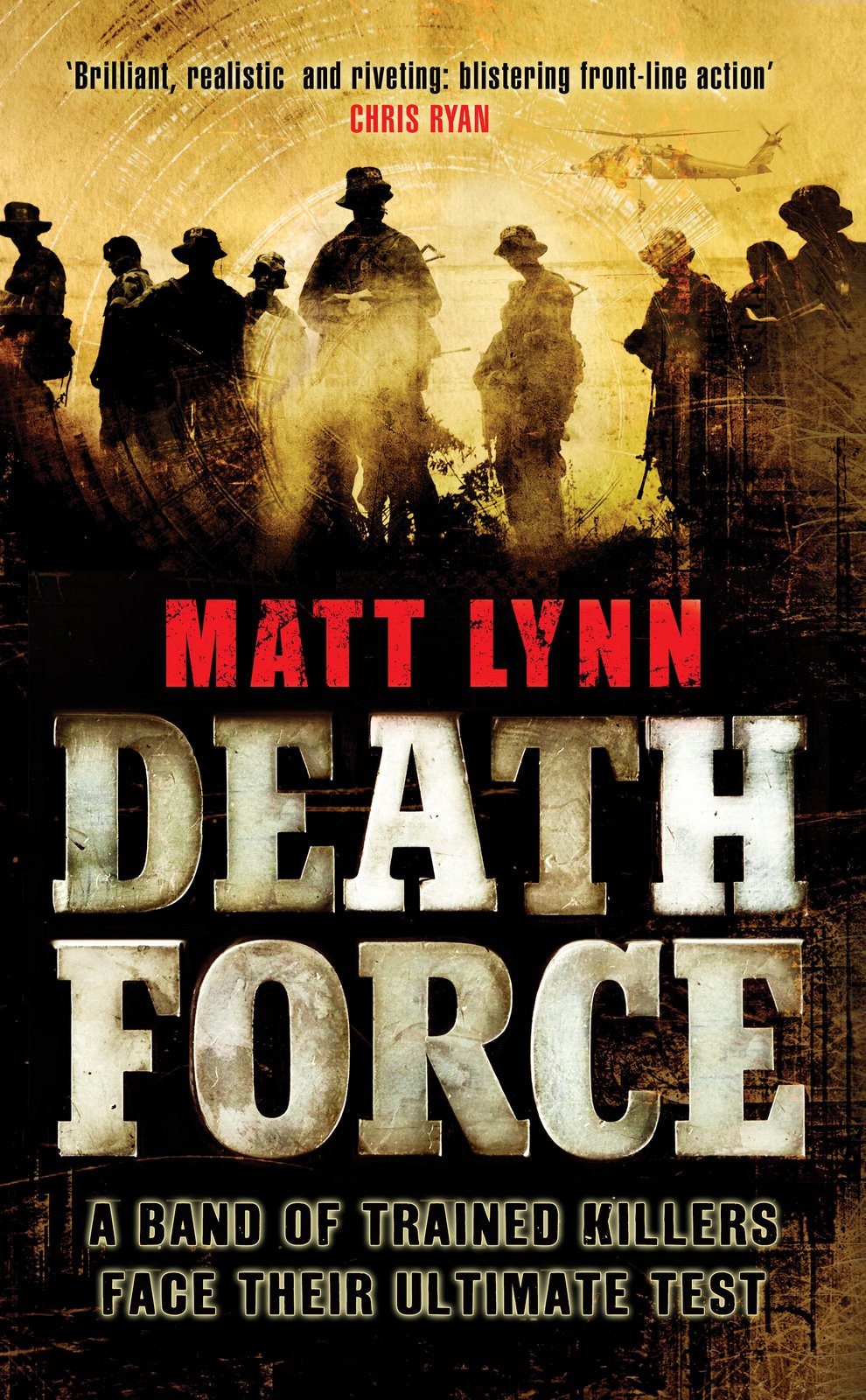
I was having lunch with my publisher, Martin Fletcher of Headline, last week. I was congratulating him on the cover of ‘Fire Force’, the sequel to ‘Death Force’, which will be out next year. It establishes a common identity with the first book, whilst being a great cover in itself. “The same, but different,” I observed.
It struck me that “the same but different” was a good way of describing how to approach writing a series of books. Increasingly, publishers want series because the characters can be established over time and the writer can build up an audience. But, of course, it poses challenges to the writer. You need to think about your characters and how they care going to develop over four or five books: in my case ten characters which is especially difficult. And then you need to keep the basic structure of the books similar, while also having sufficient variation to make them fresh and exciting.
There’s nothing wrong with “the same but different”. Mozart wrote 41 symphonies to which that description could be applied, but that doesn’t mean that most of them aren’t masterpieces. Of course you can take it too far (Take Van Morrison, for example. A genius, as well, but many of his albums could be described as ‘the same but, er, the same). The trick is to get the balance right.
I’ve just started work on ‘Shadow Force’, the third in the series. As you can see from the title, I’m keeping one word the same…while the other one is different.
I was having lunch with my publisher, Martin Fletcher of Headline, last week. I was congratulating him on the cover of ‘Fire Force’, the sequel to ‘Death Force’, which will be out next year. It establishes a common identity with the first book, whilst being a great cover in itself. “The same, but different,” I observed.
It struck me that “the same but different” was a good way of describing how to approach writing a series of books. Increasingly, publishers want series because the characters can be established over time and the writer can build up an audience. But, of course, it poses challenges to the writer. You need to think about your characters and how they care going to develop over four or five books: in my case ten characters which is especially difficult. And then you need to keep the basic structure of the books similar, while also having sufficient variation to make them fresh and exciting.
There’s nothing wrong with “the same but different”. Mozart wrote 41 symphonies to which that description could be applied, but that doesn’t mean that most of them aren’t masterpieces. Of course you can take it too far (Take Van Morrison, for example. A genius, as well, but many of his albums could be described as ‘the same but, er, the same). The trick is to get the balance right.
I’ve just started work on ‘Shadow Force’, the third in the series. As you can see from the title, I’m keeping one word the same…while the other one is different.
Tuesday, 28 July 2009
The Five Best Airport Thrillers
Over on the Curzon Group blog, I've been preparing for our airport tour by discussing the five best airporth thrillers of all time. Here's the post....
Before I disappeared to the beach, I promised to list my five favourite airport thrillers of all time. Naturally, these aren’t necessarily the best thrillers ever written. There is no space, for example, for ‘The Secret Agent’ by Joseph Conrad. Nothing by Eric Ambler either. The reason: an airport thriller has to be light, yet still terrific entertainment. Those books are too weighty. So here are five that are fun enough to read by the pool, but also fantastic, enthralling reading for the plane or the pool.
1. From Russia With Love by Ian Fleming.
The best title of all time, if not the best book. And one of the best opening sentences as well, even from one of the masters of the introductory line (and whilst we’re on that subject, was it just me who thought Sebastian Faulk’s opening to the Bond pastiche ‘Devil May Care’ was shamefully weak). Fleming is primarily a prose stylist, and a lot of his plots ranged from the creaky to the incomprehensible. But FRWL cracks along at terrific pace, and has both great villains, and love interest. Perfect in every respect.
2. Berlin Game by Len Deighton:
Len Deighton never wrote a bad book in his life, but in Berlin Game he hit his best form, a surprising achievement for a writer who’d already been churning out books for 15 years. The beginning of the Game, Set and Match trilogy, it introduces to the character of Bernard Samson, probably the most sympathetic fictional spy ever created. Grumbling and harassed, Samson may work in intelligence, but really he’s just a middle-aged executive trying to stay on top of some very complex office politics. And, hey, the wife turns out to be the Russian spy? Now there’s a twist to make you feel uncomfortable.
3. The Odessa File by Frederick Forsyth.
It’s probably just me, but I’ve never really been able to get to grips with ‘The Day of the Jackal’. But Forysth’s second book is one of the great thrillers of all time. The story of the German crime reporter who stumbles across a conspiracy to protect former Nazi’s is expertly woven. Forsyth lays out his template of forensically piecing together the plot in precise detail, and he’s followed it with brilliant success ever since. If you want to know how to write a thriller, just keep re-reading The Odessa File.
4. Jurassic Park by Michael Crichton.
Dinosaurs. They come back to life. And, yup, they eat people. There was always a crazed genius to Crichton’s high-concept techno-thrillers, and none of them did it better than Jurassic Park. His skill was to take some serious science (genetic engineering, in this case) and mix in some pop science as well (in this case, chaos theory) and blend them into a terrific story. Thrillers have always been partly about information – Crichton nailed that completely. The film is okay, but it is the book that is the real masterpiece.
5. The Firm by John Grisham.
Like Forsyth, it was with his second book that Grisham really established his style, and The Firm is far and away his best book (although ‘The Pelican Brief’ is brilliant as well, although it is downhill from there on). The sinister law firm, the exploration of offshore finance, the single, young hero placed in terrible danger, and the paper chase that finally defeats the enemy are all expertly told. Grisham is basically about how brains win out over muscle. A breath-taking read. You’ll have landed on the tarmac, and picked up your bags before you know it.
That’s my top five. Any more suggestions out there?
Before I disappeared to the beach, I promised to list my five favourite airport thrillers of all time. Naturally, these aren’t necessarily the best thrillers ever written. There is no space, for example, for ‘The Secret Agent’ by Joseph Conrad. Nothing by Eric Ambler either. The reason: an airport thriller has to be light, yet still terrific entertainment. Those books are too weighty. So here are five that are fun enough to read by the pool, but also fantastic, enthralling reading for the plane or the pool.
1. From Russia With Love by Ian Fleming.
The best title of all time, if not the best book. And one of the best opening sentences as well, even from one of the masters of the introductory line (and whilst we’re on that subject, was it just me who thought Sebastian Faulk’s opening to the Bond pastiche ‘Devil May Care’ was shamefully weak). Fleming is primarily a prose stylist, and a lot of his plots ranged from the creaky to the incomprehensible. But FRWL cracks along at terrific pace, and has both great villains, and love interest. Perfect in every respect.
2. Berlin Game by Len Deighton:
Len Deighton never wrote a bad book in his life, but in Berlin Game he hit his best form, a surprising achievement for a writer who’d already been churning out books for 15 years. The beginning of the Game, Set and Match trilogy, it introduces to the character of Bernard Samson, probably the most sympathetic fictional spy ever created. Grumbling and harassed, Samson may work in intelligence, but really he’s just a middle-aged executive trying to stay on top of some very complex office politics. And, hey, the wife turns out to be the Russian spy? Now there’s a twist to make you feel uncomfortable.
3. The Odessa File by Frederick Forsyth.
It’s probably just me, but I’ve never really been able to get to grips with ‘The Day of the Jackal’. But Forysth’s second book is one of the great thrillers of all time. The story of the German crime reporter who stumbles across a conspiracy to protect former Nazi’s is expertly woven. Forsyth lays out his template of forensically piecing together the plot in precise detail, and he’s followed it with brilliant success ever since. If you want to know how to write a thriller, just keep re-reading The Odessa File.
4. Jurassic Park by Michael Crichton.
Dinosaurs. They come back to life. And, yup, they eat people. There was always a crazed genius to Crichton’s high-concept techno-thrillers, and none of them did it better than Jurassic Park. His skill was to take some serious science (genetic engineering, in this case) and mix in some pop science as well (in this case, chaos theory) and blend them into a terrific story. Thrillers have always been partly about information – Crichton nailed that completely. The film is okay, but it is the book that is the real masterpiece.
5. The Firm by John Grisham.
Like Forsyth, it was with his second book that Grisham really established his style, and The Firm is far and away his best book (although ‘The Pelican Brief’ is brilliant as well, although it is downhill from there on). The sinister law firm, the exploration of offshore finance, the single, young hero placed in terrible danger, and the paper chase that finally defeats the enemy are all expertly told. Grisham is basically about how brains win out over muscle. A breath-taking read. You’ll have landed on the tarmac, and picked up your bags before you know it.
That’s my top five. Any more suggestions out there?
Friday, 24 July 2009
Death Force 3 & 4
Death Force must be doing okay, because Headline have just commissioned two more books in the series. Fire Force will be out next year, and I'm now working on Shadow Force...which is set among the Somnali pirates.
Thursday, 7 May 2009
The Great British Thriller Debate
Over on Book Army, there is a debate starting on the Curzon Group's campaign to kikc-start the Great British Thriller. There are some really interesting comments, so do take a look and chip in.
Subscribe to:
Posts (Atom)




 Posts
Posts


